
- Your cart is empty
- Continue Shopping

Best Ayurvedic Hair Growth Oil: How to Choose the Right Oil for Your Hair
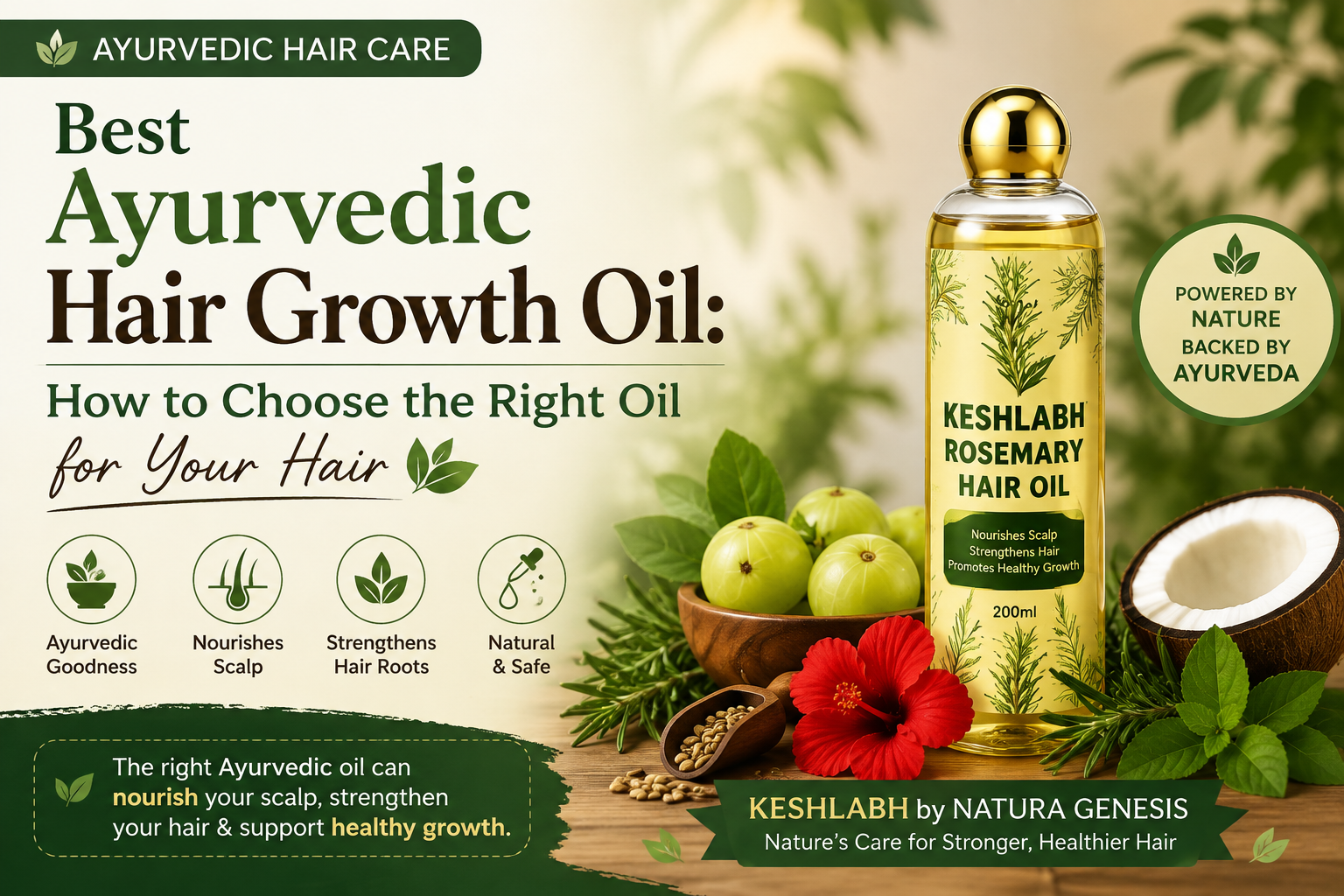
Walk into any pharmacy or scroll through any shopping app in India today, and you will find dozens of bottles claiming to be the “best Ayurvedic hair growth oil.” The labels look similar, the promises sound the same, and most people end up choosing based on packaging or a friend’s recommendation rather than actual suitability.
But Ayurvedic hair care isn’t a one-size-fits-all category. Your hair type, scalp condition, and lifestyle all play a role in deciding what will actually work for you. This guide breaks down how to think about Ayurvedic hair oils the way a knowledgeable practitioner would — practically, honestly, and without exaggerated promises.
What Makes an Ayurvedic Hair Growth Oil Different?
Ayurveda looks at hair health as a reflection of overall body balance, particularly the three doshas — Vata, Pitta, and Kapha. According to Ayurvedic thought, hair fall, premature greying, dryness, or excess oiliness often relate to an imbalance in these energies, along with poor digestion, stress, and scalp neglect.
A traditional Ayurvedic hair oil is typically made by infusing herbs into a carrier oil base (like sesame, coconut, or almond oil) through slow heating or cold infusion. This process allows the herbal properties to blend into the oil, which is then massaged into the scalp to nourish hair follicles and support the scalp’s natural environment.
In short: Ayurvedic hair oils focus on holistic scalp nourishment using herbal extracts, whereas many mainstream commercial oils rely primarily on mineral oil or synthetic fragrance with added silicones for shine.
It’s important to note that while Ayurveda has centuries of traditional use behind it, not every herbal claim has been validated through modern clinical research. A good Ayurvedic product respects both — traditional wisdom and honest expectations.
Why Hair Type Matters When Choosing a Hair-Care Product
Not all hair behaves the same way, and neither should your hair oil. Using the wrong oil for your hair type can leave your scalp feeling greasy, your strands weighed down, or your dryness untouched.
Here’s why this matters:
- Oil absorption varies — fine hair absorbs oil differently than thick, coarse hair.
- Scalp sebum production differs — oily scalps need lighter formulations; dry scalps need richer ones.
- Damage levels vary — chemically treated or heat-damaged hair often needs deeper nourishment than untreated hair.
Choosing a product without considering these factors is one of the most common reasons people feel Ayurvedic oils “don’t work” for them — when in reality, the issue is often a mismatch, not the oil itself.
Best Ayurvedic Hair-Care Approach by Hair Type
For Dry Hair
Dry hair benefits from richer, deeply nourishing oils containing ingredients like coconut oil, sesame oil, and Bhringraj. Regular oiling (2–3 times a week) with a slightly longer leave-in time before washing can help restore softness.
For Oily Hair
Oily hair and scalp need lighter oil bases and ingredients that help balance excess sebum, such as neem, hibiscus, or amla-based formulations. Oiling once or twice a week, focused more on the scalp than the lengths, tends to work better.
For Normal Hair
Normal hair has the most flexibility. A balanced Ayurvedic oil with a mix of nourishing and strengthening herbs — used consistently — is usually enough to maintain hair health without overloading it.
For Fine Hair
Fine hair can get weighed down easily. Lighter oils, used in moderate amounts and washed out within a few hours rather than overnight, tend to prevent limpness while still delivering nourishment.
For Damaged or Chemically Treated Hair
Damaged hair (from coloring, straightening, or heat styling) benefits from oils rich in proteins-supportive and moisturizing herbs like Brahmi, Amla, and Aloe Vera, which traditionally help soothe the scalp and reduce brittleness at the ends.
How Scalp Type Affects Product Selection
Many people focus only on their hair texture and forget that the scalp is where hair growth actually begins. Scalp type plays a direct role in how well a hair oil performs.
| Scalp Type | Common Concerns | Ayurvedic Approach |
|---|---|---|
| Dry Scalp | Flaking, itchiness, tightness | Richer oils with coconut, sesame, or Brahmi base |
| Oily Scalp | Excess sebum, quick greasiness | Lighter oils with neem, hibiscus, or amla |
| Sensitive Scalp | Irritation, redness | Mild, fragrance-light herbal blends |
| Normal Scalp | Occasional dryness/oiliness | Balanced herbal oil used consistently |
| Dandruff-Prone Scalp | Flaking, itching, buildup | Neem, tea tree, or antimicrobial herbal oils |
A healthy scalp is often described in Ayurveda as the foundation for healthy hair growth — which is why scalp massage (Shiroabhyanga) is considered as important as the oil itself.
Common Ayurvedic Ingredients Used in Hair Care
Understanding these ingredients helps you evaluate any product label more confidently.
Bhringraj — Often called the “king of herbs” for hair in Ayurvedic texts, traditionally used to support scalp nourishment and reduce hair fall.
Amla (Indian Gooseberry) — Rich in natural antioxidants, traditionally used to strengthen hair strands and support a healthy scalp environment.
Brahmi — Known in Ayurveda for its calming properties, often used to soothe the scalp and reduce stress-related hair thinning.
Hibiscus — Traditionally associated with promoting shine and softness, and supporting scalp circulation.
Aloe Vera — Valued for its soothing and moisturizing properties, especially useful for dry or irritated scalps.
Coconut Oil — A common carrier oil that penetrates the hair shaft, helping reduce protein loss during washing.
Other commonly used herbs include Neem (for scalp cleanliness), Fenugreek (Methi), Curry Leaves, and Ashwagandha (for stress-related hair concerns).
Note: These are traditional uses documented in Ayurvedic literature. While many of these ingredients have been studied to some extent in modern research, results can vary between individuals, and no ingredient should be viewed as a guaranteed solution.
How to Evaluate the Ingredients and Formulation of an Ayurvedic Product
Before buying any Ayurvedic hair oil, it helps to check a few things:
1. Ingredient Transparency
Look for a clear ingredient list rather than vague terms like “herbal blend” with no specifics.
2. Base Oil Quality
The carrier oil matters as much as the herbs. Cold-pressed, unrefined base oils are generally considered better for absorption.
3. Extraction Method
Traditionally infused oils (where herbs are slow-cooked into the oil) are believed to retain more of the herbal properties compared to oils that simply mix essential oil extracts into a base.
4. Absence of Harmful Additives
Check for mineral oil, artificial fragrance, or heavy silicones, which can counteract the purpose of an Ayurvedic product.
5. Suitability for Your Hair and Scalp Type
As discussed earlier, the same oil doesn’t work equally well for everyone.
How to Choose the Best Ayurvedic Hair Growth Oil for Your Needs
There’s no single “best” oil that works universally — the best Ayurvedic hair growth oil is the one that matches your specific hair type, scalp condition, and consistency of use. When evaluating options, consider:
- Does it address your specific concern (hair fall, dryness, dandruff, thinning)?
- Is the ingredient list herbal-first, without unnecessary synthetic additives?
- Is it suitable for regular, long-term use rather than just occasional treatment?
- Does the brand make realistic claims, rather than promising overnight or permanent results?
Ayurvedic hair care works gradually and requires consistency — it is not designed for instant transformation, and any product claiming otherwise should be viewed with caution.
Where Keshlabh by Natura Genesis Fits In
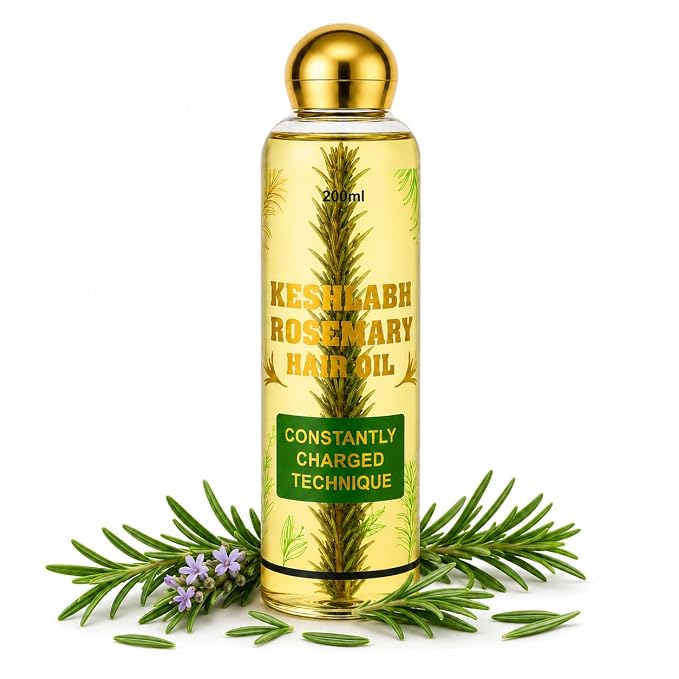
This is where a well-formulated herbal option like Keshlabh by Natura Genesis can be considered as part of a regular hair-care routine. Natura Genesis, as a brand, positions Keshlabh as a herbal hair-care formulation that draws on Ayurvedic ingredients such as those discussed above, aimed at supporting scalp nourishment and hair strength as part of consistent, everyday care.
Get Keshlabh Rosemary Hair Oil →
Rather than positioning it as a miracle cure, Keshlabh is best understood as a supportive addition to a broader hair-care routine — one that includes a balanced diet, adequate sleep, gentle hair handling, and regular scalp care. Like any Ayurvedic product, results depend on consistent use, individual hair and scalp conditions, and overall lifestyle factors.
If you’re exploring herbal hair care options, it’s worth evaluating a product like Keshlabh the same way you would evaluate any other Ayurvedic oil — by checking its ingredient list, formulation approach, and suitability for your particular hair and scalp type.
Hair Oil vs Herbal Hair Serum: What’s the Difference?
Many people use these terms interchangeably, but they serve different purposes.
Traditional Hair Oil
- Applied to scalp and hair, usually left on for a few hours or overnight
- Designed for deep nourishment and scalp massage
- Typically requires washing out
- Best suited for regular oiling routines
Herbal Hair Serum
- Lightweight, often leave-in formulation
- Designed for daily use without washing out
- Focuses on smoothness, frizz control, and light nourishment
- Doesn’t replace deep oiling but complements it
Both can coexist in a hair-care routine — oil for deeper, periodic nourishment, and serum for daily lightweight care, especially for those who find traditional oiling too heavy for everyday use.
Common Mistakes People Make When Choosing Hair-Growth Products
- Ignoring hair and scalp type and choosing a product purely based on marketing claims.
- Expecting overnight results from a category that traditionally works gradually.
- Overusing oil, which can lead to buildup and a heavier, greasier scalp over time.
- Skipping scalp massage, which is a key part of how Ayurvedic oiling is meant to work.
- Not checking ingredient lists, relying instead on the word “Ayurvedic” on the label without verification.
- Switching products too frequently, not allowing enough time to observe results.
- Ignoring diet, stress, and sleep, which significantly influence hair health alongside topical care.
When Persistent or Unusual Hair Loss May Need a Dermatologist’s Advice
While Ayurvedic hair oils can be a supportive part of a hair-care routine, they are not a substitute for medical care when hair loss is unusual or severe. It’s advisable to consult a dermatologist or trichologist if you notice:
- Sudden or excessive hair fall over a short period
- Visible bald patches or thinning in specific areas
- Scalp inflammation, persistent itching, or sores
- Hair loss accompanied by other symptoms like fatigue or irregular periods
- No improvement despite months of consistent hair care
A dermatologist can help identify underlying causes such as hormonal imbalance, nutritional deficiencies, or medical conditions, which topical oils alone cannot address.
Frequently Asked Questions
What is the best Ayurvedic hair growth oil? The best Ayurvedic hair growth oil is one formulated with transparent, herbal-first ingredients suited to your specific hair and scalp type, used consistently as part of a regular routine.
How do I choose the right Ayurvedic hair oil? Identify your hair type and scalp condition first, then check the ingredient list, base oil quality, and whether the brand makes realistic, non-exaggerated claims.
Which Ayurvedic ingredients are commonly used for hair care? Common ingredients include Bhringraj, Amla, Brahmi, Hibiscus, Aloe Vera, Coconut Oil, Neem, and Fenugreek, each traditionally associated with different hair and scalp benefits.
Is Ayurvedic hair oil suitable for every hair type? Most Ayurvedic oils can be adapted for different hair types, but the specific formulation, oil base, and application method should be adjusted based on whether your hair is dry, oily, fine, normal, or damaged.
How often should hair oil be used? This depends on hair and scalp type, but generally 2–3 times a week is a common recommendation, with adjustments for oilier or drier scalps.
What is the difference between hair oil and hair serum? Hair oil is typically used for deeper nourishment and is washed out after some time, while hair serum is a lightweight, leave-in product used for daily smoothness and frizz control.
Is Keshlabh suitable for regular hair care? Keshlabh by Natura Genesis is formulated as a herbal hair-care product intended for regular use as part of a consistent hair-care routine, alongside good overall hair and scalp practices.
What makes Keshlabh by Natura Genesis different? Keshlabh is positioned by Natura Genesis as a herbal formulation drawing on traditional Ayurvedic ingredients, focused on supporting scalp nourishment and hair strength through regular, realistic use rather than promising instant results.
Final Thoughts
Choosing the best Ayurvedic hair growth oil isn’t about finding a magic bottle — it’s about understanding your hair type, your scalp’s needs, and being consistent with a formulation that genuinely suits you. Ayurveda offers a time-tested, holistic approach to hair care, but it works best when paired with realistic expectations, good ingredient awareness, and healthy daily habits.
Whether you choose a traditional herbal oil, a product like Keshlabh by Natura Genesis, or a combination of oiling and lightweight serums, the key lies in consistency, patience, and listening to what your hair and scalp actuall