
- Your cart is empty
- Continue Shopping

Shilajit: What It Is, Traditional Uses, Benefits & How to Choose It
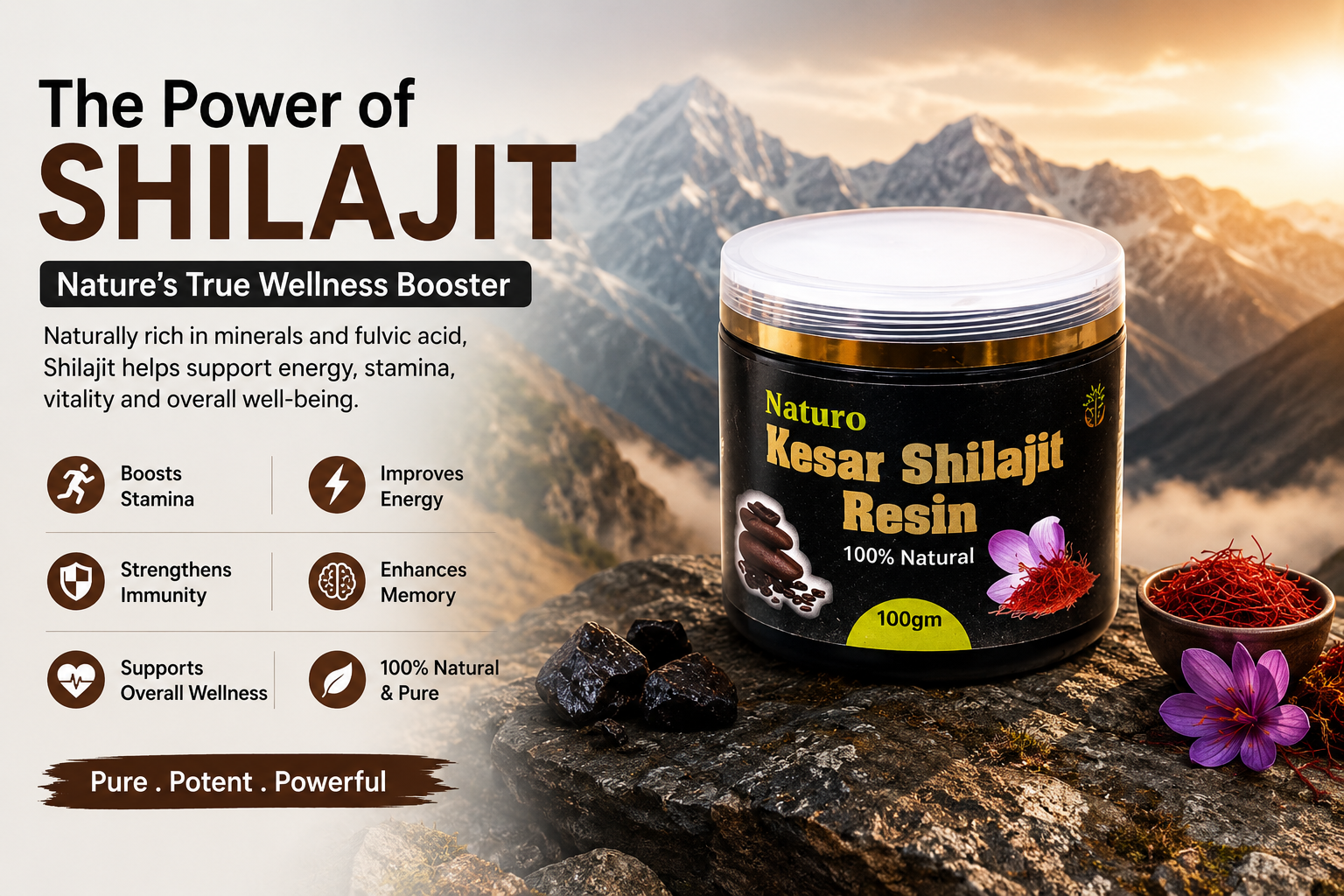
You’ve probably seen it in your feed. A dark, resin-like substance being scraped off a spoon, dissolved in warm water, with someone claiming it changed their energy levels overnight. Or maybe a friend mentioned it after their trip to the mountains. Either way, you’re left with the same question most people have before they buy anything unfamiliar: what exactly is Shilajit, and what should you actually look for before trying it?
That second question matters more than most people realize. Shilajit isn’t a single standardized product. It’s a natural substance that varies quite a bit depending on where it comes from, how it’s collected, and how it’s processed before it ever reaches a jar or capsule. Two products labeled “Shilajit” can look, behave, and perform very differently.
This article walks through what Shilajit actually is, where it fits into Ayurvedic tradition, what people commonly use it for, and how to tell a thoughtfully made product from a vague one. No hype, no miracle claims. Just the information you’d want before spending your money on something you’re putting in your body.
What Exactly Is Shilajit?
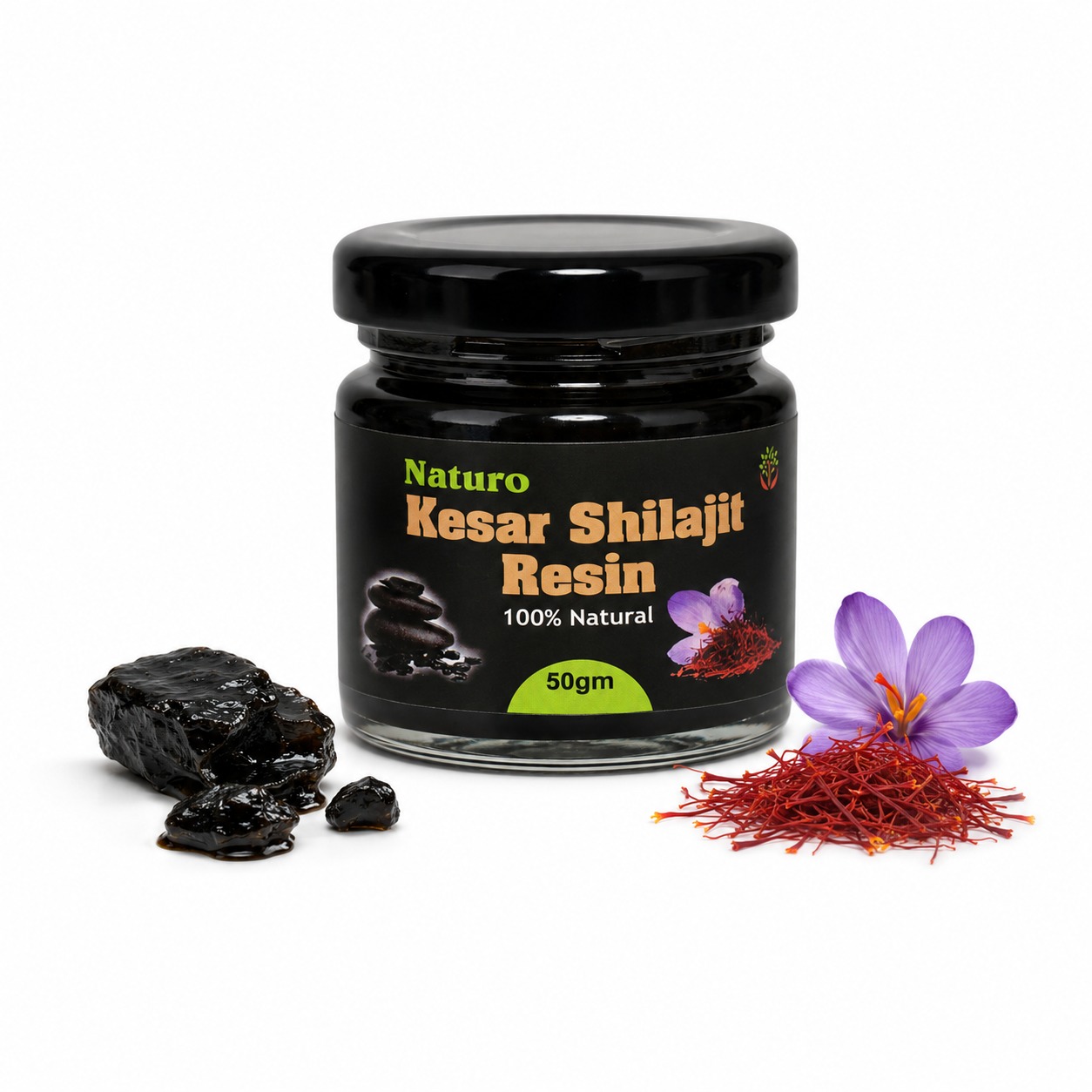
Shilajit is a sticky, tar-like substance that seeps out of rock layers in certain mountain ranges, most notably the Himalayas, but also parts of the Altai, Caucasus, and other high-altitude regions. It forms over a very long period as plant and microbial matter gets compressed between rock layers and slowly breaks down under pressure, temperature shifts, and time.
In its raw form, Shilajit is dark brown to black, dense, and slightly resinous. During warmer months, it can soften and exude from rock crevices, which is when it’s traditionally collected. It has a strong, earthy smell that surprises a lot of first-time users. That smell, by the way, is normal and expected, not a sign of anything wrong.
Quick Answer: Shilajit is a naturally occurring mineral-rich substance formed from decomposed plant matter compressed in mountain rock over long periods. It’s traditionally collected from high-altitude regions like the Himalayas and used in Ayurvedic wellness practices, typically after purification and processing.
Because it forms in nature rather than being manufactured in a lab, its exact composition varies from batch to batch and region to region. This is one reason two Shilajit products can look and behave differently even if both are labeled “pure” or “Himalayan.” Altitude, rock type, climate, and how carefully it was purified all play a role.
Good to Know: Raw Shilajit collected directly from rock is not meant to be consumed as-is. It typically goes through a purification process to remove impurities like organic debris, insects, or unwanted mineral matter before it’s considered suitable for use.
Why Has Shilajit Been Used in Ayurveda?
Shilajit holds a long-standing place in Ayurvedic tradition, where it’s sometimes referred to using terms that translate roughly to “conqueror of mountains” or “destroyer of weakness.” In classical Ayurvedic texts, it’s described as a rasayana, a category of substances traditionally associated with vitality, rejuvenation, and general wellness support.
It’s worth being clear about something here. Traditional use and modern scientific evidence are two different things, and this article treats them that way throughout. Ayurveda developed Shilajit’s reputation over centuries of observational use within a specific medical and philosophical framework. That’s meaningful from a cultural and historical standpoint, but it’s not the same as clinical proof.
Modern research on Shilajit does exist, and interest in it has grown, particularly around its mineral content and fulvic acid, a compound formed during the decomposition process. But research in this area is still developing, sample sizes in many studies are small, and results don’t always translate directly to real-world outcomes. Anyone telling you the science is fully settled either hasn’t looked closely or is oversimplifying for a sales pitch.
What Are the Traditional Uses of Shilajit?
In Ayurvedic practice, Shilajit has traditionally been associated with several areas of wellness. These are historical and cultural associations rather than confirmed medical outcomes, and they’re worth understanding in that light.
- General vitality – traditionally used as a rasayana to support overall energy and resilience
- Stamina and physical endurance – historically taken by those with physically demanding routines
- Men’s wellness – traditionally associated with male vitality and reproductive wellness in Ayurvedic texts
- Healthy aging – used in traditional formulations aimed at supporting the body through the aging process
- General rejuvenation – often combined with other herbs in Ayurvedic formulations for broader wellness support
Buyer’s Tip: If a product description uses words like “traditionally used for” or “associated with” rather than “cures” or “treats,” that’s usually a sign of more responsible labeling, not a weaker product.
What Are the Potential Wellness Benefits of Shilajit?
This is the section most people are actually curious about, so let’s be direct and balanced about it.
Energy and vitality. Fulvic acid and the mineral profile in purified Shilajit are commonly discussed in relation to cellular energy production. Some early research has looked at this connection, though results across studies aren’t uniform, and more work is needed before firm conclusions can be drawn.
Physical stamina. This is one of the more consistent traditional associations, and it’s part of why Shilajit shows up in wellness routines aimed at supporting an active lifestyle. Traditional use doesn’t equal guaranteed performance improvement for every individual.
General wellness and antioxidant interest. Shilajit contains compounds that researchers have studied for antioxidant activity. Antioxidants in general are of interest for supporting the body against oxidative stress, though this is a broad area of nutrition science, not something specific to Shilajit alone.
Men’s wellness. Shilajit has a long traditional association with male vitality in Ayurvedic practice, and it appears in some modern wellness formulations aimed at this audience. This should not be read as a claim about fertility treatment, testosterone guarantees, or sexual performance. Anyone with specific concerns in this area should speak with a healthcare provider rather than relying on a supplement alone.
Healthy aging. As a rasayana herb, Shilajit is traditionally positioned as a long-term wellness support rather than a quick fix, which fits with how many people incorporate it into a daily routine rather than using it occasionally.
Common Mistake: Assuming that because something is “traditional” or “natural,” it works the same way for everyone or that more of it means better results. Individual responses vary, and moderation matters.
Shilajit Resin vs Shilajit Capsules: What’s the Difference?
This is one of the first practical decisions beginners face, and there isn’t a single right answer. It depends on your routine, your taste tolerance, and how much control you want over dosing.
| Feature | Shilajit Resin | Shilajit Capsules |
|---|---|---|
| Form | Thick, sticky, tar-like substance taken directly or dissolved in water | Powdered or processed Shilajit sealed inside a capsule |
| Convenience | Requires measuring a small pea-sized portion each time | Pre-measured, just take with water |
| Dosage consistency | Can vary slightly based on how it’s scooped | Generally more consistent from dose to dose |
| Travel convenience | Slightly messier to carry and measure on the go | Easier to pack and take anywhere |
| Traditional-style experience | Closer to how Shilajit has historically been consumed | A modern adaptation for convenience |
| Ease of use | Some get used to the taste and texture over time | No taste to manage, straightforward to take |
Neither form is universally “better.” Resin appeals to people who want a more traditional experience and don’t mind the taste, which is strong and something you’ll want to be prepared for the first time. Capsules appeal to people who want convenience, consistent dosing, and no adjustment period. What matters more than the format is the quality of what’s inside it.
How to Choose Good-Quality Shilajit
This is where most buying decisions actually go wrong, so it’s worth slowing down here.
- Ingredient transparency. A trustworthy product lists exactly what’s in it, including whether anything besides purified Shilajit has been added. Vague labeling is a red flag.
- Source information. Knowing the general region a product is sourced from (for example, Himalayan) gives you more confidence than a label that says nothing about origin at all.
- Processing information. Purification matters. A brand that explains, even briefly, how raw Shilajit is purified before use is showing more accountability than one that stays silent on the process.
- Product testing. Reputable brands often test for heavy metals and contaminants, since Shilajit is mineral-rich and sourced from rock. Look for mentions of testing, even if full lab reports aren’t publicly posted.
- Manufacturing standards. General information about where and how a product is manufactured, even at a high level, adds a layer of trust that an unmarked jar doesn’t offer.
- Packaging. Shilajit resin especially should come in packaging that protects it from excess moisture and light, since these can affect texture and stability over time.
- Batch information. A batch or lot number suggests the manufacturer has traceability systems in place, which matters if something ever needs to be checked or recalled.
- Label clarity. Clear, specific labeling beats bold marketing language every time. If a label leans heavily on words like “miracle” or “guaranteed,” that’s worth noticing.
- Storage instructions. Genuine Shilajit resin is sensitive to heat and humidity. A product with no storage guidance at all suggests less attention to detail.
- Company transparency. Basic, accessible information about who makes the product and how to reach them is a simple but telling signal of legitimacy.
Quick Answer: Good-quality Shilajit is identified through transparent labeling, clear source and processing information, evidence of testing, proper packaging, batch traceability, and a company willing to share real details rather than just marketing claims.
How to Identify Authentic Shilajit
“100% pure” is one of the most overused phrases in this category, and on its own, it doesn’t prove much. Authenticity isn’t something you can reliably judge by looking at a product or smelling it, no matter how confident an online video makes that sound.
What actually helps:
- Proper labeling that specifies ingredients, form, and net quantity clearly
- Testing documentation, even summarized, that indicates checks for contaminants
- Batch information that ties a specific jar or box to a specific production run
- Manufacturer details, including a real company name and contact information
- Ingredient transparency, meaning no unlisted fillers or additives
- Responsible sourcing claims that are specific rather than vague marketing language
Common Mistake: Relying on home tests, like whether Shilajit dissolves fully in water or forms a certain shape when dropped in, as proof of purity. These tests are widely shared online but aren’t scientifically reliable indicators. Real Shilajit can behave differently based on purification level and moisture content, and adulterated products can be made to mimic these reactions.
What Should You Check Before Buying Shilajit Online?
Think of this as the checklist you’d want a knowledgeable friend to hand you before you click “add to cart.”
✓ Check the ingredient label for exactly what’s included ✓ Look for manufacturer name and contact details ✓ Check for batch or lot information ✓ Understand which form you’re buying: resin, capsule, or a blend ✓ Read the storage instructions before you buy, not after ✓ Be cautious of exaggerated or disease-related health claims ✓ Look for transparent, specific product information rather than vague buzzwords ✓ Compare price against quantity and concentration, not just the number on the tag
Buyer’s Tip: If a listing makes you feel like you need to buy immediately because of a countdown timer or an aggressive claim, slow down. Legitimate wellness products don’t usually need that kind of pressure to sell themselves.
How Is Shilajit Traditionally Prepared?
Broadly speaking, traditional Shilajit preparation involves a few general stages, though the specifics can differ between manufacturers and regions.
Collection typically happens during warmer months when Shilajit softens and can be gathered from rock surfaces at high altitude. From there, it usually goes through a purification stage, where the raw material is processed to remove organic debris, insects, and excess mineral matter that shouldn’t be there. This step is important because raw, unpurified Shilajit isn’t considered suitable for consumption.
After purification, the material may be further refined and formulated, either kept in its resin form or processed into a powder that can be encapsulated. It’s worth remembering that this is a general overview. Actual manufacturing methods vary by producer, and no single universal process applies to every Shilajit product on the market.
Natura Genesis Shilajit Range
Natura Genesis offers Shilajit in a few different formats designed around how people actually want to include it in their day. The range includes Natura Genesis Shilajit Resin for those who prefer a more traditional format, Natura Genesis Shilajit Capsules for a simpler, on-the-go option, and Natura Genesis Shilajit Ashwagandha for those interested in a combined Ayurvedic-inspired formulation.
The focus across the range is on clear product information rather than exaggerated promises. That means labeling that tells you what’s actually in the product, straightforward guidance on how to use it, and formats that fit different routines and preferences. If you’re comparing Shilajit products in general, looking for this kind of clarity is a good habit regardless of which brand you end up choosing.
Shilajit Myths vs Facts
Myth: “More Shilajit means better results.” Fact: Taking more than the recommended amount doesn’t necessarily improve outcomes and may just mean using the product faster than intended. Following suggested usage guidelines is the more sensible approach.
Myth: “Dark-looking Shilajit is automatically pure.” Fact: Color alone doesn’t indicate purity. Both authentic and adulterated products can appear similarly dark, so color shouldn’t be used as a deciding factor.
Myth: “Resin is always better than capsules.” Fact: Neither form is inherently superior. The right choice depends on personal preference, convenience, and most importantly, the quality of the product itself.
Myth: “All Himalayan Shilajit products are the same.” Fact: Region is only one factor. Purification method, testing practices, and manufacturing standards all affect the final product, even among items sourced from similar areas.
Myth: “A home test can prove purity.” Fact: Popular tests like dissolving Shilajit in water aren’t scientifically reliable proof of authenticity. Lab testing and transparent sourcing information are far more meaningful indicators.
Myth: “Natural automatically means safe for everyone.” Fact: Natural substances can still interact with medications or health conditions. Anyone pregnant, nursing, managing a medical condition, or taking medication should check with a healthcare professional first.
Myth: “Shilajit works the same way for everyone, immediately.” Fact: Individual responses vary based on health status, consistency of use, and overall lifestyle. Traditional use in Ayurveda generally reflects long-term incorporation rather than a one-time quick fix.
Frequently Asked Questions
How does Shilajit fit into traditional Ayurvedic wellness?
Shilajit is classified in Ayurveda as a rasayana, a category of substances traditionally associated with vitality and rejuvenation. It has been used historically alongside other herbs as part of broader wellness practices, though this reflects traditional use rather than confirmed clinical outcomes.
How is Shilajit traditionally used?
Traditionally, purified Shilajit is taken in small, measured amounts, often dissolved in warm water or milk. In modern practice, it’s also available in capsule form for convenience. Traditional use has historically centered on daily or routine incorporation rather than occasional use.
How can you choose good-quality Shilajit?
Look for transparent ingredient labeling, information about sourcing and processing, evidence of contaminant testing, clear batch details, and proper packaging with storage instructions. A company that shares real information, rather than relying only on marketing language, is generally a better sign.
How can you identify authentic Shilajit?
Authenticity is best judged through proper labeling, testing documentation, batch traceability, and manufacturer transparency rather than appearance or home tests. Vague claims like “100% pure” without supporting details should be approached with some caution.
How is Shilajit resin different from capsules?
Resin is the more traditional, concentrated form that requires manual measuring and has a strong taste, while capsules offer pre-measured, convenient dosing with no taste to manage. Both can be made from quality Shilajit; the difference is mainly about format and personal preference.
How should beginners compare different Shilajit products?
Beginners should compare labeling clarity, source information, processing details, and testing practices rather than focusing only on price or packaging appeal. Starting with a smaller quantity from a transparent brand is a reasonable way to try it first.
How is Shilajit traditionally processed?
Traditional processing generally involves collecting raw Shilajit from mountain rock, followed by purification to remove organic debris and unwanted mineral matter. Specific methods vary by producer, so it’s worth checking what a particular brand describes about its own process.
How should Shilajit be stored?
Shilajit resin should typically be kept in a cool, dry place, away from direct sunlight and excess moisture, with the container sealed tightly after use. Capsules generally have similar storage needs. Always follow the specific instructions listed on your product’s packaging.
How can you check the information on a Shilajit label?
Look for a clear ingredient list, net quantity, manufacturer name and contact details, batch or lot number, and usage instructions. Labels that avoid vague claims and instead provide specific, checkable details are generally more trustworthy.
How does Shilajit compare with Shilajit-Ashwagandha formulations?
Shilajit-Ashwagandha combinations pair Shilajit with Ashwagandha, another herb with its own traditional Ayurvedic associations, often related to stress and overall wellness support. Whether a combination or single-herb product suits you better depends on your personal wellness goals.
How long has Shilajit been used traditionally?
Shilajit has a documented history in Ayurvedic texts spanning many centuries, where it was described as a rejuvenating substance within traditional medicine. This long history reflects cultural and traditional significance rather than a guarantee of specific modern outcomes.
How should you approach Shilajit if you have specific health concerns?
Anyone with an existing health condition, who is pregnant or nursing, or who is taking medication should speak with a qualified healthcare professional before adding Shilajit to their routine. This helps ensure it’s appropriate for your individual situation rather than relying on general information alone.
Before You Choose Your Shilajit
If you’re exploring Shilajit for your daily wellness routine, take a closer look at the product information, ingredients, and format before choosing. Understanding source, processing, and labeling will tell you far more than a flashy product page ever will. Natura Genesis offers Shilajit products in convenient formats for different preferences, built around clear product information rather than exaggerated promises.