- Your cart is empty
- Continue Shopping

Which Is the Best Ayurvedic Shampoo for Hair Growth in India?
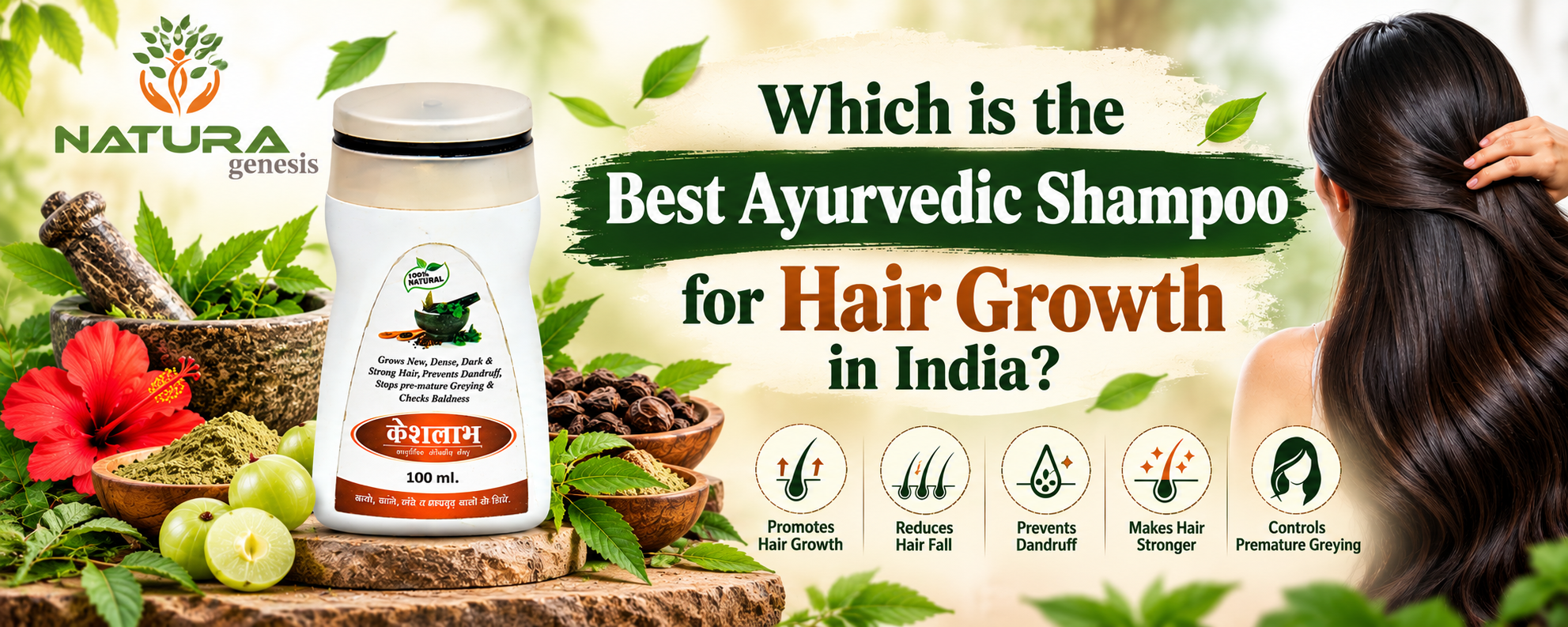
Below are ten products worth considering when comparing a herbal shampoo for hair growth, a shampoo for hair breakage, or a cleansing product for general hair maintenance.
The products have different ingredient approaches, marketing positions, and intended uses. Availability and formulations can change, so readers should check the latest product packaging before purchasing.
1. KESHLABH Herbal Hair Shampoo – Featured Herbal Hair-Care Product

Featured brand product | General hair-care consideration
KESHLABH Herbal Hair Shampoo is our featured product for readers interested in adding a herbal hair shampoo to their regular cleansing routine.
People searching for a natural shampoo for healthy hair often want a product that fits their scalp needs while helping them maintain clean, manageable hair. KESHLABH Herbal Hair Shampoo can be considered as part of that comparison, subject to confirmation of its full formulation and directions.
A good hair-care routine starts with proper cleansing. Washing removes accumulated oil, sweat, dirt, and styling-product residue. Gentle washing, followed by suitable conditioning, may also help reduce avoidable damage caused by rough handling.
What should consumers know about KESHLABH?
Before selecting KESHLABH Herbal Hair Shampoo, consumers should examine its packaging for the complete ingredient list, manufacturer details, directions, and precautions.
Ingredients: The exact KESHLABH formulation has not been supplied or independently verified. Therefore, no claims are made here that it contains amla, bhringraj, shikakai, reetha, aloe vera, or any specific botanical extract.
Intended use: It is presented as a herbal hair-cleansing product. Any more specific benefits should be assessed against the manufacturer’s verified label information.
Who may consider it? Readers exploring herbal shampoo options for routine hair care may include KESHLABH in their shortlist, provided the formula is suitable for their scalp condition and ingredient sensitivities.
How to use: Follow the instructions printed on the actual product packaging. Avoid assuming that it is suitable for daily use unless the manufacturer confirms this.
Why consider KESHLABH Herbal Hair Shampoo?
KESHLABH is relevant to consumers comparing herbal hair-care products because it provides another option to evaluate alongside established brands. Its suitability should be judged by formulation transparency, cleansing performance, individual tolerance, and the results of ordinary hair maintenance—not unsupported promises of hair regrowth.
Important: Product-specific benefits, daily-use suitability, certifications, and ingredient claims must be confirmed before publication as verified facts.
2. Indulekha Bringha Hair Fall Control Shampoo
Indulekha Bringha Hair Fall Control Shampoo is an Ayurvedic-positioned hair cleanser sold in India. It is marketed for people concerned about hair fall and scalp cleanliness.
The manufacturer’s ingredient information identifies botanical ingredients including bhringraj, amla, shikakai, and rosemary in its Bringha cleanser information. The brand associates these ingredients with traditional hair-care benefits.
Its main attraction is the combination of Ayurvedic-inspired ingredients and a ready-to-use shampoo formulation. People who prefer familiar Indian herbal ingredients may find it worth comparing.
However, traditional claims about stimulating hair growth should not be interpreted as proof that the shampoo treats genetic hair loss or creates new follicles. Individuals with sensitive scalps should also check the complete packaging information.
Best compared for: Ayurvedic-inspired cleansing and general hair-fall concerns.
Consideration: Assess whether the particular formulation suits your hair texture and scalp sensitivity.
3. Himalaya Anti-Hair Fall Bhringaraja Shampoo
Himalaya Anti-Hair Fall Bhringaraja Shampoo is designed for people experiencing hair fall associated with breakage.
According to Himalaya’s official product information, its featured ingredients include bhringaraja, palasha, and natural proteins from soy and wheat.
The manufacturer positions the shampoo as a cleansing and nourishing formulation intended to help reduce breakage-related hair fall and improve hair manageability.
This distinction is important because hair breaking along the shaft is different from hair loss caused by hormonal changes or medical conditions.
People dealing with weak, tangled, or difficult-to-manage hair may compare this product with other conditioning-focused shampoos.
Best compared for: Hair fall associated with breakage and everyday hair maintenance.
Consideration: The manufacturer’s breakage-reduction claims should not be interpreted as evidence of treatment for medical hair loss.
4. Khadi Natural Amla & Bhringraj Hair Cleanser
Khadi Natural Amla & Bhringraj Hair Cleanser is a herbal shampoo option inspired by traditional Indian hair-care ingredients.
The manufacturer’s published information identifies amla and bhringraj as important botanical ingredients. Its product range includes different Amla & Bhringraj formulations, so the exact pack and ingredient list matter.
Khadi Natural markets these cleansers for scalp cleaning, softer-feeling hair, and general hair maintenance. Certain variants are also marketed as free from specific cleansing agents or additives.
Consumers who prefer products featuring recognisable Ayurvedic herbs may find this range relevant.
However, a product containing traditional herbs is not automatically suitable for every scalp, and the presence of amla or bhringraj does not establish clinically proven hair regrowth.
Best compared for: Traditional herbal ingredients and regular scalp cleansing.
Consideration: Check the exact variant, fragrance content, and full ingredient list.
5. Patanjali Kesh Kanti Advance Herbal Hair Expert Shampoo
Patanjali Kesh Kanti Advance Herbal Hair Expert Shampoo is positioned as a herbal hair-care product containing several traditional botanical ingredients.
Its official composition includes bhringraj, amla, aloe vera, hibiscus, shikakai, neem, curry leaf, and fenugreek, among other listed ingredients.
This combination may appeal to consumers looking for a shampoo that draws on several plants commonly associated with Indian hair-care traditions.
Its intended role is hair cleansing and maintenance, while the manufacturer’s broader claims about strengthening and hair health should be considered separately from scientifically demonstrated regrowth.
A longer botanical ingredient list is not necessarily better for everyone. People with known plant allergies or sensitive scalps should review the full formula carefully.
Best compared for: A multi-herb Ayurvedic-inspired shampoo formulation.
Consideration: Multiple herbal ingredients can still cause sensitivity in some individuals.
6. Khadi Natural Neem & Aloevera Hair Cleanser
Khadi Natural Neem & Aloevera Hair Cleanser is another herbal-positioned product in the company’s shampoo range.
The manufacturer identifies neem and aloe vera in the product name and markets it for scalp-care concerns, including cleansing and smoother-feeling hair.
Neem has a long history of use in traditional skin and scalp preparations, while aloe vera is commonly included in products designed to support comfort and conditioning.
This makes the product an option to investigate for consumers who prioritise scalp care alongside cleansing.
However, itching, flaking, or redness can have several causes, including dandruff, eczema, and allergic reactions. A herbal shampoo should not be assumed to treat these conditions.
Best compared for: Neem-and-aloe-focused herbal scalp care.
Consideration: Verify the full ingredient list on the exact pack, particularly if fragrance or plant extracts have previously caused irritation.
7. Khadi Natural Shikakai Hair Cleanser
Khadi Natural Shikakai Hair Cleanser is marketed as a herbal hair-washing product featuring shikakai, a traditional cleansing ingredient.
Shikakai contains naturally occurring saponins and has been used in Indian hair-cleansing practices for generations.
This product may interest readers who want to compare a traditional cleansing-herb approach with formulations focused on proteins, oils, or conditioning agents.
The manufacturer’s shampoo collection lists this cleanser among its hair-care products and markets it for hair and scalp maintenance.
However, the complete formula determines how a finished shampoo performs. The presence of shikakai alone does not guarantee mildness, improved hair growth, or freedom from irritation.
Best compared for: Traditional shikakai-inspired hair cleansing.
Consideration: Check whether the formula provides enough conditioning for dry, curly, or easily tangled hair.
8. Khadi Natural Herbal Amla & Reetha Hair Cleanser
Khadi Natural Herbal Amla & Reetha Hair Cleanser combines two ingredients closely associated with traditional Indian hair washing.
Amla is widely used in Ayurvedic-inspired hair-care preparations, while reetha is known for its natural saponin content and cleansing properties.
The manufacturer markets this cleanser for scalp nourishment and general hair maintenance.
It may appeal to consumers interested in a botanical cleansing approach, especially those comparing reetha-based products with conventional surfactant formulations.
Still, the concentration of herbal ingredients, the complete shampoo base, and any added fragrance or preservatives are important to assess.
Consumers should not assume that reetha automatically makes a shampoo less irritating or that amla guarantees stronger hair roots.
Best compared for: Traditional amla-and-reetha-inspired cleansing.
Consideration: Evaluate the actual formulation and how hair feels after washing.
9. Khadi Natural Hibiscus & Aloe Vera Hair Cleanser
Khadi Natural Hibiscus & Aloe Vera Hair Cleanser is positioned as a botanical hair-care option for consumers concerned about dryness, roughness, and hair manageability.
Its named botanical ingredients are hibiscus and aloe vera. The manufacturer markets this cleanser for smoother hair and reduced split-end concerns.
Hibiscus has a history of traditional use in Indian hair masks and herbal preparations. Aloe vera is frequently incorporated into cosmetic products for its conditioning and soothing characteristics.
People with frizzy or dry-feeling hair may compare this formulation with more cleansing-focused shampoos.
However, shampoo alone cannot permanently repair an already split hair end, and botanical ingredients do not guarantee new hair growth.
Best compared for: Herbal-positioned cleansing with a focus on smoother-feeling hair.
Consideration: Dry hair may still need a separate conditioner or leave-in product.
10. Mamaearth Onion Shampoo with Onion and Plant Keratin
Mamaearth Onion Shampoo is a modern botanical-inspired shampoo rather than a traditional Ayurvedic formulation. It is included as a comparison for consumers exploring herbal and plant-ingredient hair-care products.
The manufacturer’s published formula includes onion-derived ingredients, cleansing surfactants, conditioning polymers, panthenol, and amino acids.
Mamaearth markets this product for hair fall associated with damage and for improving hair manageability.
Its combination of botanical ingredients and conventional cosmetic technology makes it useful for understanding how modern herbal-inspired shampoos are formulated.
Consumers with dry, coloured, or chemically treated hair may consider comparing it with other conditioning shampoos, although suitability varies.
Best compared for: Modern botanical-inspired hair care and breakage-related concerns.
Consideration: Onion-related marketing claims should not be interpreted as clinical proof of new hair growth.
Chemical-Based Shampoos Ka Sach – What Should Consumers Know?
Many people searching for the Best Ayurvedic Shampoo in India are also worried about the possible side effects of chemical-based shampoos.
Terms such as “chemical shampoo,” “toxic ingredients,” and “100% natural” frequently appear in hair-care marketing.
But what does science actually tell us?
The important point is that not all chemicals are harmful, and not all natural ingredients are harmless.
The safety and performance of a shampoo depend on its complete formulation, ingredient concentrations, how often it is used, and individual sensitivity.
1. Strong or irritating cleansing agents
Cleansing agents help remove excess oil, dirt, and buildup from the scalp.
Some shampoos use sulfate-based surfactants, including sodium lauryl sulfate or sodium laureth sulfate. Others use different cleansing systems.
Certain formulations may leave hair feeling dry or rough, particularly when used too frequently or on already dry hair.
People with sensitive scalps or damaged hair may prefer a milder-feeling cleanser.
However, it is incorrect to claim that every sulfate-containing shampoo damages hair follicles or causes baldness.
What to check: Review the cleanser ingredients, assess how your hair feels after washing, and adjust your routine if a product consistently causes dryness.
2. Fragrances and fragrance allergens
Fragrance helps create a pleasant product experience, but certain fragrance ingredients can cause irritation or allergic contact dermatitis in susceptible people.
Symptoms may include itching, redness, or scalp discomfort.
Both synthetic fragrances and natural essential oils can trigger reactions.
People with a history of fragrance sensitivity may benefit from comparing fragrance-free formulations.
What to check: Look for terms such as “fragrance,” “parfum,” and listed fragrance allergens. A product labelled “natural fragrance” is not automatically allergy-free.
3. Preservatives
Preservatives help protect water-containing shampoos from microbial contamination during storage and use.
They are an important part of product safety.
Some preservatives can cause allergic reactions in susceptible individuals, but that does not mean all preservatives are dangerous.
A shampoo without an adequate preservation system may present its own safety problems.
What to check: Review the ingredient list and avoid specific preservatives only when there is a relevant medical reason or known allergy.
4. Hair dyes, styling products, and scalp irritation
Not every scalp problem comes from shampoo.
Hair dyes, bleaching products, styling gels, sprays, chemical straightening treatments, and excessive heat can also contribute to discomfort or hair damage.
Repeated friction, tight hairstyles, and aggressive brushing may increase breakage.
People who use multiple products should consider their complete hair-care routine rather than blaming shampoo alone.
What to check: Identify when irritation begins and whether it follows a particular product or salon treatment. Seek professional advice for persistent reactions.
5. Misleading hair-growth claims
Some shampoos are advertised with phrases such as “instant hair growth,” “permanent hair-fall solution,” or “guaranteed new hair.”
These claims deserve careful examination.
A shampoo may improve cleansing, reduce tangling, or make hair look fuller. That does not establish that it can reverse hereditary hair loss.
The American Academy of Dermatology explains that hair loss has many different causes and that appropriate management depends on the diagnosis.
Possible Side Effects of Unsuitable Shampoo
Even a popular or herbal shampoo may not suit every person.
Potential problems include:
Dryness and rough hair
A cleanser that removes more oil than your hair needs may leave strands feeling rough, stiff, or difficult to manage.
Scalp itching or irritation
Certain ingredients may irritate susceptible skin, particularly when a scalp condition is already present.
Allergic reactions
Fragrances, preservatives, botanical extracts, and other ingredients can trigger allergic reactions in some individuals.
Increased tangling and hair breakage
Hair that becomes difficult to detangle after washing may be more likely to break during brushing or styling.
Worsening existing scalp discomfort
People with eczema, psoriasis, or other scalp conditions may find that certain shampoos worsen symptoms.
These effects depend on the specific ingredients, their concentrations, the overall formula, washing frequency, and individual sensitivity. They are not inevitable effects of shampoo use.
If a product causes significant itching, redness, swelling, or discomfort, discontinue it. Persistent symptoms or unusual hair loss should be assessed by a qualified dermatologist.
Ayurvedic Shampoo vs Chemical-Based Shampoo
The phrase “chemical-based shampoo” is commonly used to describe conventional shampoos, but both herbal and conventional products contain chemical substances.
The following table compares their typical approaches without assuming that one category is automatically superior.
| Feature | Ayurvedic or herbal shampoo | Conventional shampoo |
|---|---|---|
| Ingredient approach | Often highlights traditional botanical extracts | May emphasise surfactants, conditioners, or specialised active ingredients |
| Cleansing performance | Depends on the complete cleansing formulation | Depends on the complete cleansing formulation |
| Available formulations | Includes herbal-inspired products for different needs | Includes gentle, clarifying, moisturising, and specialised formulas |
| Potential irritation | Possible from botanicals, fragrance, preservatives, or cleansers | Possible from fragrance, preservatives, cleansers, or other ingredients |
| Hair-growth evidence | Traditional use does not establish clinical regrowth | Hair-growth claims also require product-specific evidence |
| Hair-type suitability | Varies with formulation and individual needs | Varies with formulation and individual needs |
| Ingredient-label importance | Essential | Essential |
The takeaway: Choose a shampoo based on scalp comfort, hair texture, cleansing requirements, ingredient sensitivities, and reliable product information—not solely on whether it is described as herbal or conventional.
Which Ayurvedic Ingredients Are Commonly Used in Hair Care?
Understanding Ayurvedic ingredients for hair growth is useful when comparing herbal shampoos.
Many traditional Indian ingredients have been used for generations. However, traditional popularity should not be confused with strong clinical evidence.
1. Amla (Indian Gooseberry)
Amla, scientifically known as Phyllanthus emblica, is widely used in traditional Indian hair-care preparations.
It contains naturally occurring plant compounds, including polyphenols, and is commonly included in hair oils, powders, and shampoos.
Amla is traditionally associated with maintaining healthy-looking hair. However, strong human clinical evidence demonstrating that amla shampoo regrows lost hair is insufficient.
2. Bhringraj
Bhringraj, commonly identified as Eclipta prostrata or Eclipta alba, is an important herb in traditional Ayurvedic hair care.
It appears in many products marketed for hair fall and scalp nourishment.
Some preliminary laboratory and animal research has explored its biological properties, but these findings cannot establish that an ordinary bhringraj shampoo reverses human hair loss.
3. Shikakai
Shikakai, derived from Acacia concinna, has traditionally been used to clean hair.
It contains naturally occurring saponins, which contribute to its cleansing properties.
Shikakai is particularly relevant when discussing herbal hair-washing methods. However, cleansing ability does not automatically mean that it stimulates hair follicles or promotes new hair growth.
4. Reetha
Reetha, commonly called soapnut, comes from plants in the Sapindus genus.
It is known for its natural saponin content and has traditionally been used to remove oil and dirt.
Reetha may be included in herbal cleansing products, but the mildness and effectiveness of a finished shampoo depend on the entire formula.
5. Neem
Neem (Azadirachta indica) is widely recognised in traditional Indian skin and scalp care.
Its extracts have been studied for several biological properties, including antimicrobial activity in laboratory settings.
However, laboratory findings do not establish that neem shampoo treats scalp infections or prevents hair loss in humans.
6. Aloe Vera
Aloe vera is frequently used in cosmetic products because of its moisturising and skin-conditioning characteristics.
It may be included in shampoos intended for dry-feeling hair or scalp comfort.
Nevertheless, aloe vera is not a clinically established shampoo treatment for hereditary hair loss.
7. Hibiscus
Hibiscus, especially Hibiscus rosa-sinensis, is traditionally used in Indian hair oils, masks, and herbal preparations.
It is associated with hair conditioning and maintaining soft, manageable hair.
Although preliminary research has investigated hibiscus extracts, strong evidence that hibiscus-containing shampoos regrow human hair remains lacking.
Remember: The effectiveness of a herbal hair shampoo in India depends on more than the presence of one traditional ingredient. The complete formulation, cleansing system, conditioning properties, and individual response all matter.
How to Choose the Right Shampoo for Your Hair Type
The best herbal shampoo for hair fall is not necessarily the same product for everyone.
Hair texture, scalp condition, washing frequency, and personal sensitivities should guide your decision.
For oily scalp
An oily scalp may require regular cleansing to remove accumulated sebum, sweat, and styling products.
Choose a shampoo that cleans effectively without causing persistent tightness or irritation.
For dry hair
Dry hair generally benefits from gentle cleansing and suitable conditioning.
Look for formulations designed to maintain softness and reduce roughness. Using conditioner on the lengths and ends may help.
For frizzy hair
Frizzy hair can become more difficult to manage when it lacks adequate conditioning or experiences excessive friction.
Choose a shampoo that leaves hair manageable and combine it with a conditioner or suitable detangling product.
For hair prone to breakage
If hair breaks during brushing, focus on reducing friction and tangling.
A suitable shampoo, conditioner, and gentle combing routine may help reduce mechanical damage.
For sensitive scalp
People with sensitive scalps should pay particular attention to fragrances, botanical extracts, and ingredients that have previously caused reactions.
A fragrance-free formulation may be worth considering when fragrance sensitivity is known.
For coloured or chemically treated hair
Coloured, bleached, or chemically treated hair may be more vulnerable to dryness and damage.
Consider shampoos specifically formulated for treated hair, along with appropriate conditioning.
Dermatologists recommend gentle cleansing and conditioning to help reduce hair breakage, split ends, and frizz.
How to Use KESHLABH Herbal Hair Shampoo
Proper shampooing can be just as important as choosing a suitable product.
The following is a general cleansing guide, not a substitute for KESHLABH’s manufacturer instructions.

Step 1: Wet your hair and scalp
Use comfortable lukewarm water to wet your hair thoroughly before applying shampoo.

Step 2: Apply shampoo
Use the amount recommended on the KESHLABH product label. Do not assume a specific quantity without verified directions.

Step 3: Massage gently
Use your fingertips to distribute the shampoo across the scalp. Avoid vigorous scratching with your nails.

Step 4: Rinse thoroughly
Remove the shampoo completely using clean water.

Step 5: Condition if needed
Apply a suitable conditioner to the lengths and ends, particularly if your hair is dry or prone to tangling.

Step 6: Handle hair gently
Avoid rough towel rubbing and excessive pulling. Stop using the shampoo if significant irritation develops.
Important: KESHLABH’s recommended washing frequency, quantity, and any special application instructions must be confirmed from the actual product label.
Tips to Support Healthy Hair Growth
Choosing a suitable shampoo is only one part of maintaining healthy hair.
Maintain balanced nutrition
Hair health depends partly on adequate nutrition. A balanced diet containing sufficient protein, iron, and other essential nutrients supports normal body functions, including hair growth.
Include adequate protein
Hair is primarily made of keratin, a structural protein. Regularly consuming appropriate protein-rich foods can help meet the body’s nutritional needs.
Handle wet hair carefully
Wet hair can be vulnerable to damage during aggressive brushing or pulling.
Use gentle detangling methods and avoid unnecessary friction.
Reduce excessive heat styling
Frequent use of high-temperature styling tools may contribute to dryness and hair damage.
Where possible, reduce heat exposure and follow suitable styling precautions.
Avoid tight hairstyles
Hairstyles that repeatedly pull on the scalp can damage hair over time.
Choose comfortable styles that do not create persistent tension.
Seek medical advice when needed
Sudden shedding, visible thinning, bald patches, or persistent scalp symptoms should not be managed through shampoo changes alone.
A dermatologist can investigate whether the problem is related to nutritional deficiencies, hormonal conditions, hereditary hair loss, or other causes.
The American Academy of Dermatology emphasises that identifying the underlying cause improves the chances of choosing appropriate treatment.
Frequently Asked Questions
1. Which is the best Ayurvedic shampoo for hair growth in India?
There is no single scientifically established best Ayurvedic shampoo for everyone. Products such as KESHLABH Herbal Hair Shampoo, Indulekha Bringha Shampoo, Himalaya Anti-Hair Fall Bhringaraja Shampoo, and Khadi Natural herbal cleansers can be compared according to their ingredients, cleansing approach, and intended uses.
The best choice depends on individual scalp needs and formulation suitability. Shampoo alone cannot guarantee new hair growth.
2. Can Ayurvedic shampoo stop hair fall completely?
No. Ayurvedic shampoos may help maintain scalp cleanliness and, depending on the formulation, reduce some breakage-related concerns.
However, hair fall caused by genetics, hormonal changes, nutritional deficiencies, or medical conditions may require other interventions.
3. Is KESHLABH Herbal Hair Shampoo suitable for daily use?
Daily-use suitability has not been independently verified for KESHLABH Herbal Hair Shampoo.
Consumers should check the manufacturer’s instructions and consider their scalp condition, hair type, and washing needs. If the product causes dryness or irritation, discontinue use and seek appropriate advice.
4. Do chemical-based shampoos cause hair loss?
Not necessarily.
Conventional shampoos are not inherently harmful. However, unsuitable formulations may cause dryness, irritation, or increased breakage in susceptible users.
Persistent hair loss should be evaluated separately because it may have causes unrelated to shampoo.
5. Are sulfate-free shampoos always better?
No.
Sulfate-free formulations may suit some people who find particular cleansing systems too drying, but sulfate-free does not automatically mean milder or safer.
The complete formula and individual response are more important than the absence of a single ingredient category.
6. Which Ayurvedic ingredients are commonly used in hair-care products?
Common ingredients include amla, bhringraj, shikakai, reetha, neem, aloe vera, and hibiscus.
These ingredients have traditional uses in hair and scalp care, but their presence does not automatically establish clinically proven hair-regrowth benefits.
7. Can shampoo regrow lost hair?
Ordinary cosmetic shampoos are not established treatments for regrowing hair lost because of hereditary or medical conditions.
Some shampoos may improve hair appearance, scalp hygiene, and breakage-related concerns. Genuine hair regrowth depends on the underlying cause and, where necessary, appropriate treatment.
8. How long does it take to notice a difference after changing shampoo?
Changes in cleansing, softness, or manageability may be noticeable after the first few washes.
Improvements in breakage-related concerns may take longer to assess. There is no universal timeline, and changing shampoo does not guarantee increased hair growth.
9. How can I identify an unsuitable shampoo?
A shampoo may be unsuitable if it repeatedly causes significant dryness, itching, redness, discomfort, or difficult-to-manage hair.
Consider whether symptoms began after introducing the product. Discontinue use if significant irritation occurs, and consult a dermatologist if symptoms persist.
10. When should I consult a dermatologist for hair fall?
Seek professional advice if you experience sudden or persistent excessive shedding, noticeable thinning, bald patches, scalp inflammation, or unexplained changes in hair density.
Early assessment may help identify treatable causes and prevent further problems.
Final Verdict: Choosing the Best Ayurvedic Shampoo in India
The search for the best Ayurvedic shampoo in India should begin with understanding your hair and scalp—not simply choosing the product with the strongest advertising claims.
Different shampoos serve different needs.
Some focus on traditional botanical ingredients such as amla and bhringraj. Others emphasise gentle cleansing, conditioning, scalp comfort, or reducing hair breakage.
KESHLABH Herbal Hair Shampoo is our featured product for readers exploring herbal hair-care options. Before choosing it, consumers should review its verified ingredient list, directions, precautions, and suitability for their individual needs.
Indulekha, Himalaya, Khadi Natural, Patanjali, and other brands also provide formulations worth comparing.
Ultimately, the most suitable shampoo is one that cleans your scalp effectively, works comfortably with your hair type, and supports a manageable routine without causing unnecessary irritation.
Healthy hair care involves much more than shampoo. Balanced nutrition, gentle handling, suitable conditioning, and professional advice when necessary all play important roles.
Choose informed hair care over exaggerated hair-growth promises.