- Your cart is empty
- Continue Shopping

Kidney Stone Ayurvedic Treatment: Best Medicine for Kidney Stone, Causes, Symptoms & Complete Guide
Introduction
Kidney stones are among the most common urinary tract disorders affecting millions of people worldwide. In India, the prevalence of kidney stone disease has increased due to changing dietary habits, sedentary lifestyles, dehydration, obesity, and rising temperatures. While some kidney stones are small enough to pass naturally, others can cause severe pain, urinary blockage, recurrent infections, and complications that require immediate medical attention.
Many people search online for the best medicine for kidney stone, kidney stone pain relief Syrup India, and kidney stone Ayurvedic treatment because they want effective, natural, and long-term ways to support kidney health while reducing the chances of recurrence. Along with modern medical treatments, Ayurveda has traditionally used herbal formulations to support urinary wellness, healthy kidney function, and overall well-being.
Understanding how kidney stones develop, recognizing their symptoms early, and adopting healthy lifestyle habits can play an important role in maintaining kidney health. The right hydration, balanced diet, timely diagnosis, and appropriate treatment plan recommended by a qualified healthcare professional are essential for effective management.
This comprehensive guide explains everything you need to know about kidney stones, including:
- What kidney stones are
- How kidney stones form
- How kidney stone look like
- Different types of kidney stones
- Common symptoms
- Major causes and risk factors
- Best treatment for kidney stones
- Kidney stone Ayurvedic treatment
- Kidney stone pain relief syrup India
- Lifestyle and dietary recommendations
- Ayurvedic herbal support for kidney wellness
Whether you are experiencing kidney stone symptoms for the first time or looking for ways to reduce the risk of recurrence, this guide provides evidence-based information along with insights into traditional Ayurvedic kidney care.
What Is a Kidney Stone?
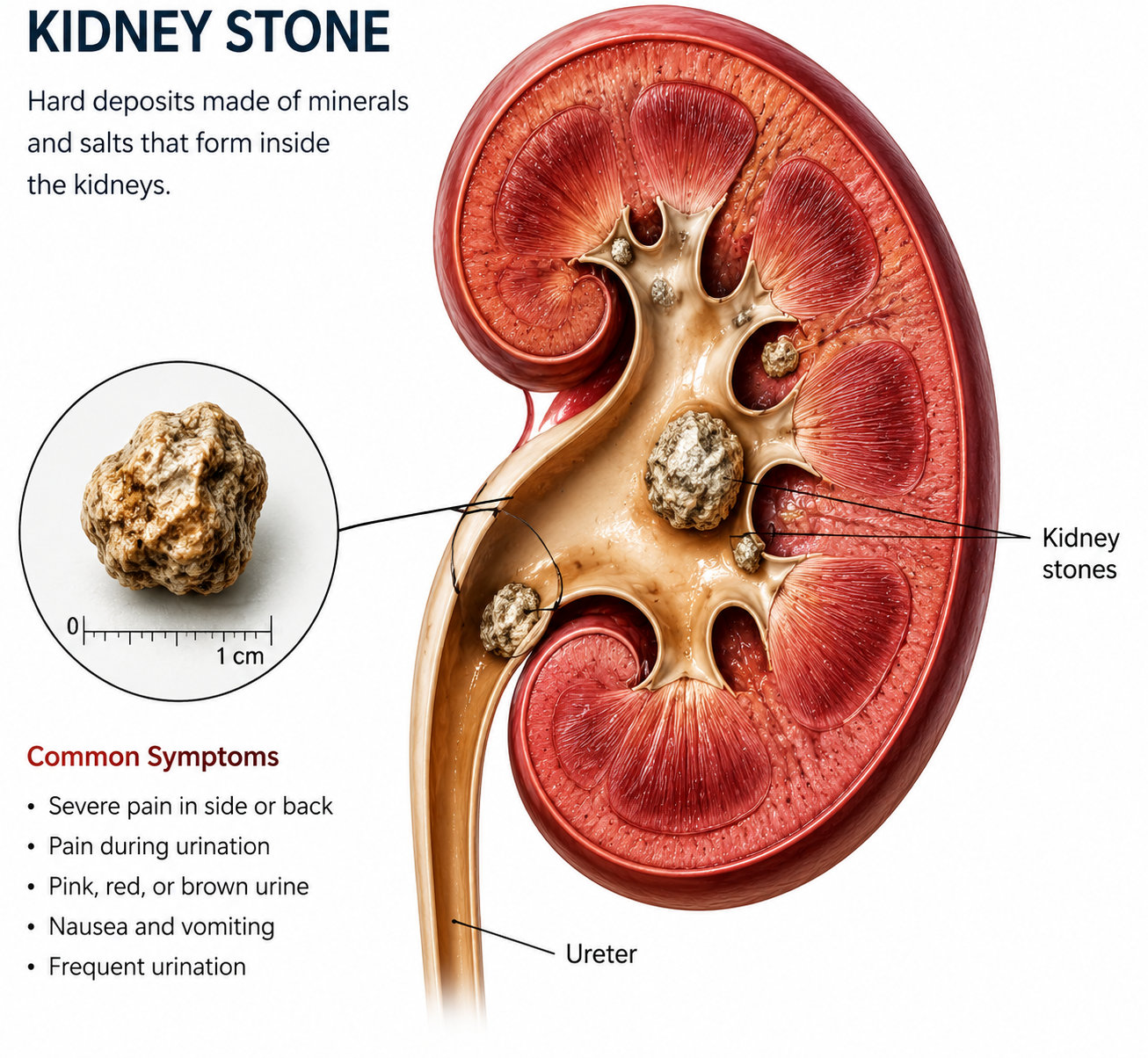
A kidney stone, medically known as renal calculus or nephrolithiasis, is a hard deposit formed from minerals and salts that crystallize inside the kidneys. The kidneys continuously filter waste products and excess minerals from the blood to produce urine. Under certain conditions, these minerals become highly concentrated, stick together, and gradually develop into crystals. Over time, these crystals grow into kidney stones.
Kidney stones vary in size. Some are as tiny as a grain of sand and may pass through the urinary tract without causing noticeable symptoms. Others can grow several centimeters in diameter and block the flow of urine, leading to severe pain and other complications.
The urinary system includes:
- Kidneys
- Ureters
- Bladder
- Urethra
A stone can develop inside the kidney and later move into the ureter, where it may partially or completely block urine flow. This blockage increases pressure inside the kidney and causes the intense pain commonly associated with kidney stones.
How Do Healthy Kidneys Work?
Before understanding kidney stone formation, it is helpful to know the role of healthy kidneys.
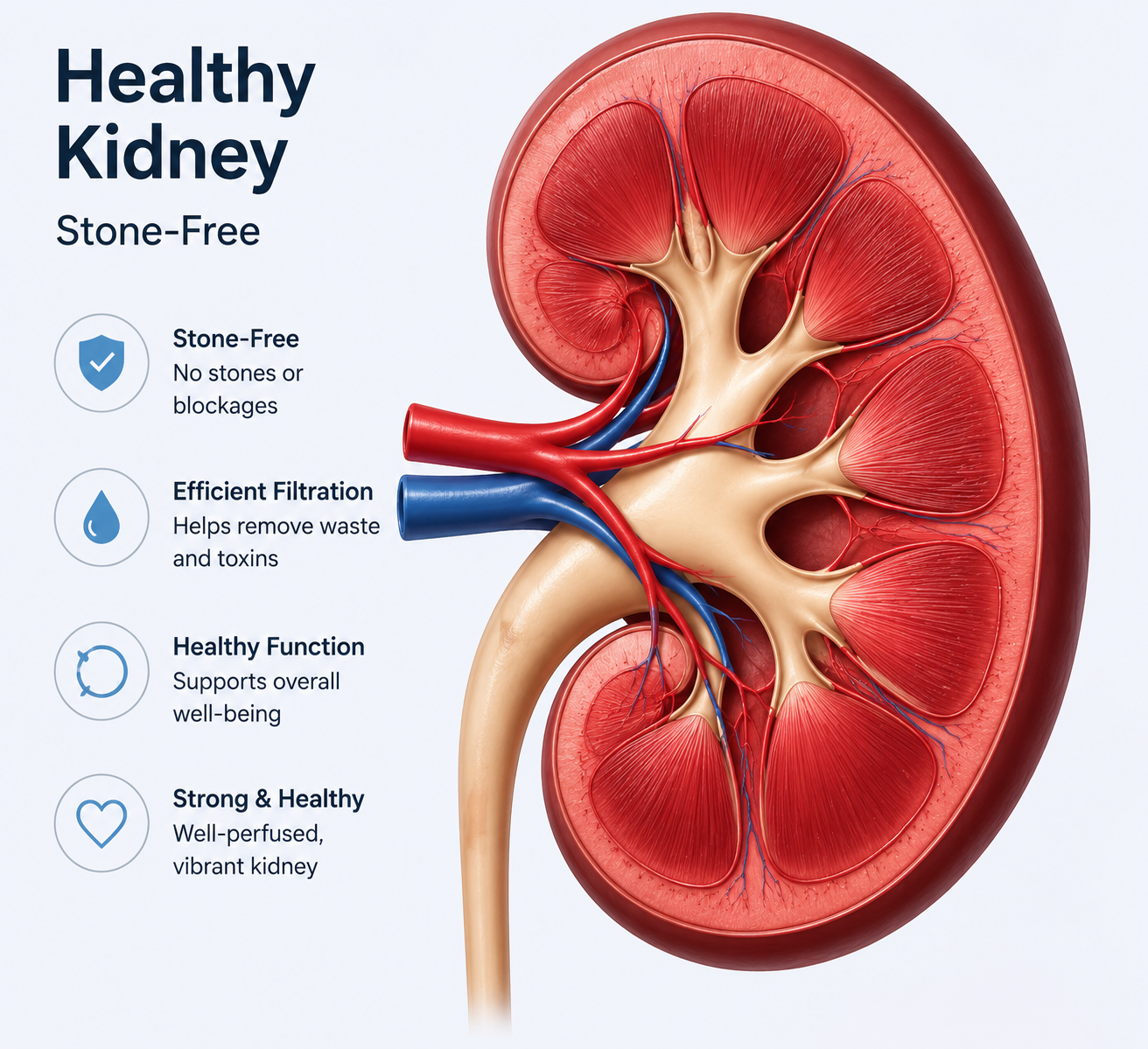
Your kidneys perform several essential functions:
- Filter approximately 180 liters of blood every day
- Remove waste products from the body
- Maintain fluid balance
- Regulate blood pressure
- Balance electrolytes such as sodium and potassium
- Help produce red blood cells through hormone regulation
- Support healthy bone metabolism by activating vitamin D
When mineral concentrations become too high or urine becomes excessively concentrated due to dehydration, stone formation becomes more likely.
How Kidney Stones Form
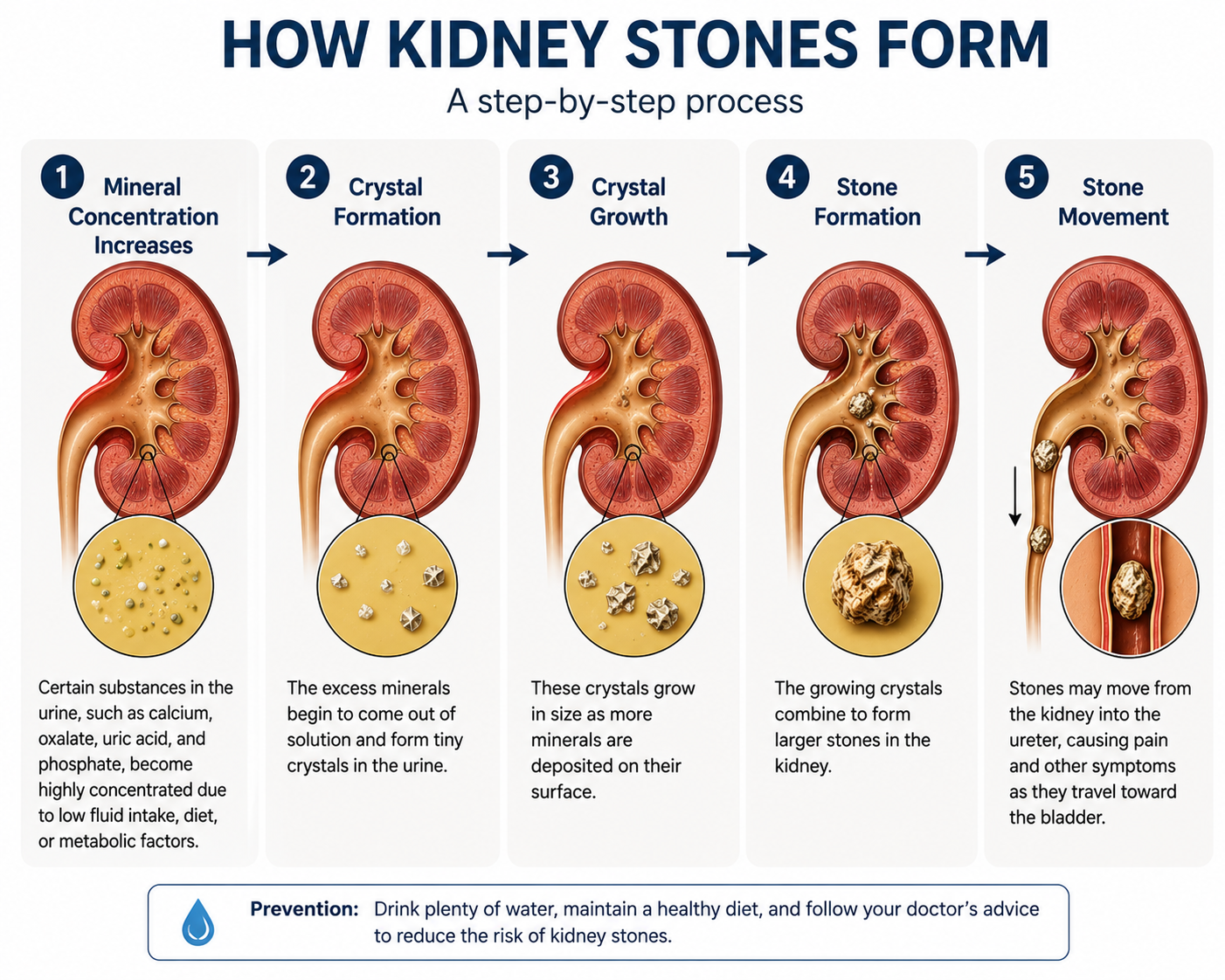
Kidney stones do not appear overnight. They usually develop gradually through a series of biological processes.
Step 1: Mineral Concentration Increases
Urine contains various dissolved minerals, including:
- Calcium
- Oxalate
- Uric acid
- Phosphate
- Cystine
Normally, these substances remain dissolved and are eliminated safely through urine. However, dehydration or certain medical conditions increase their concentration.
Step 2: Crystal Formation
When mineral concentration exceeds the urine’s ability to dissolve them, tiny microscopic crystals begin to form.
These crystals often contain:
- Calcium oxalate
- Calcium phosphate
- Uric acid
Initially, they are extremely small and may not produce symptoms.
Step 3: Crystal Growth
As additional minerals attach to the original crystal, it gradually enlarges.
Without adequate hydration, the crystals continue growing instead of being flushed out naturally.
Step 4: Stone Formation
Eventually, multiple crystals combine into a solid stone.
Depending on mineral composition, the stone may become:
- Smooth
- Rough
- Spiky
- Hard
- Irregular
Step 5: Stone Movement
Once formed, the stone may remain inside the kidney or move into the ureter.
If the stone becomes lodged inside the ureter, urine cannot flow normally, resulting in:
- Severe pain
- Swelling of the kidney
- Blood in urine
- Nausea
- Vomiting
How Kidney Stone Look Like
One of the most searched questions online is “How kidney stone look like?”
Kidney stones vary considerably in appearance depending on their composition and size.
Small kidney stones often resemble:
- Fine sand
- Tiny crystals
- Small grains
Larger kidney stones may appear like:
- Small pebbles
- Jagged rocks
- Sharp irregular fragments
- Rounded smooth stones
Common Colors
Kidney stones can appear in different colors, including:
- Yellow
- Brown
- Dark brown
- Black
- White
- Light orange
Surface Texture
Their outer surface may be:
- Smooth
- Rough
- Spiky
- Crystalline
- Irregular
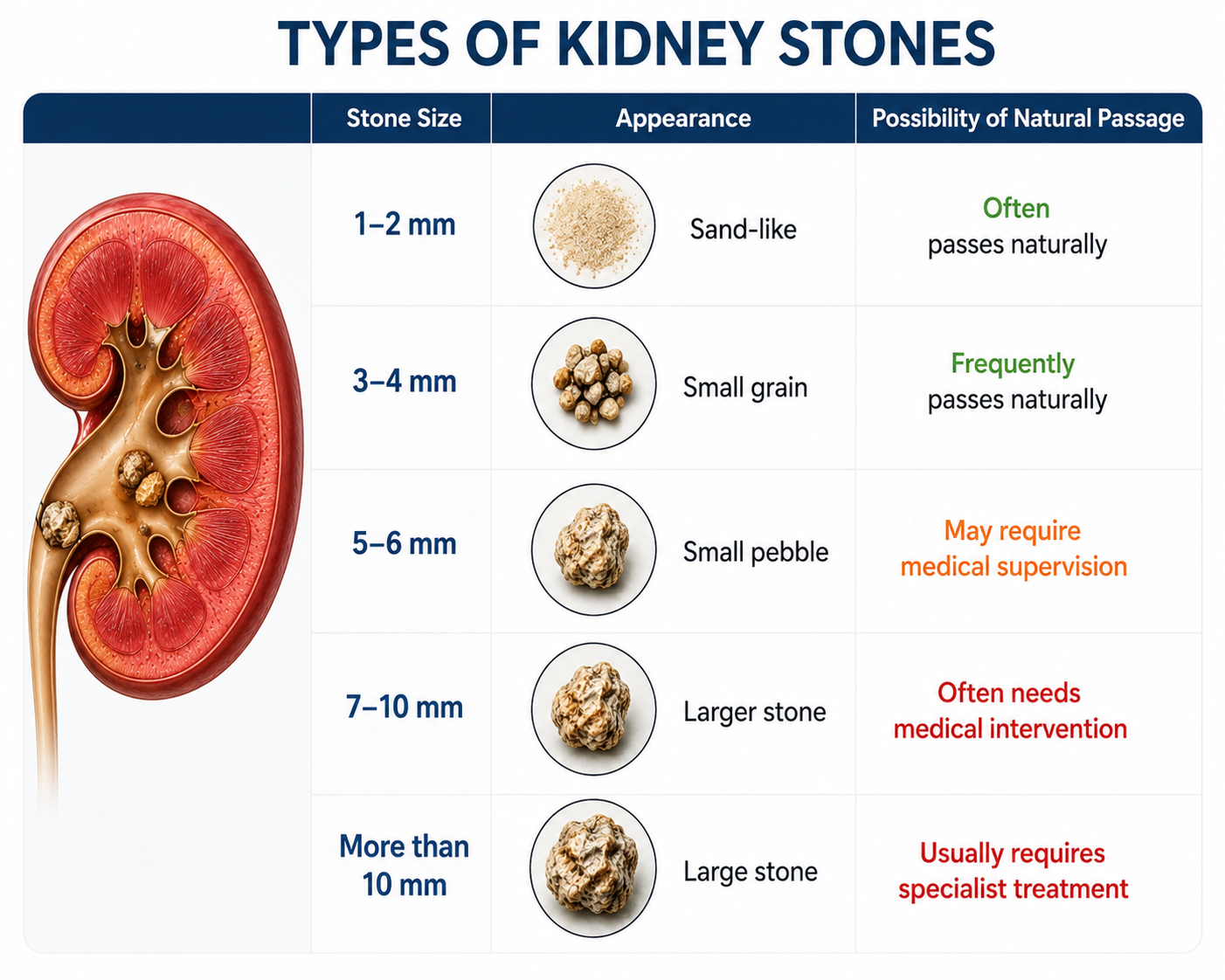 Typical Sizes
Kidney stones range from extremely small to very large.
| Stone Size | Appearance | Possibility of Natural Passage |
|---|---|---|
| 1–2 mm | Sand-like | Often passes naturally |
| 3–4 mm | Small grain | Frequently passes naturally |
| 5–6 mm | Small pebble | May require medical supervision |
| 7–10 mm | Larger stone | Often needs medical intervention |
| More than 10 mm | Large stone | Usually requires specialist treatment |
Stone size alone does not determine symptoms. Even a small stone can cause severe pain if it blocks the ureter, while a larger stone remaining inside the kidney may cause minimal discomfort.
Types of Kidney Stones
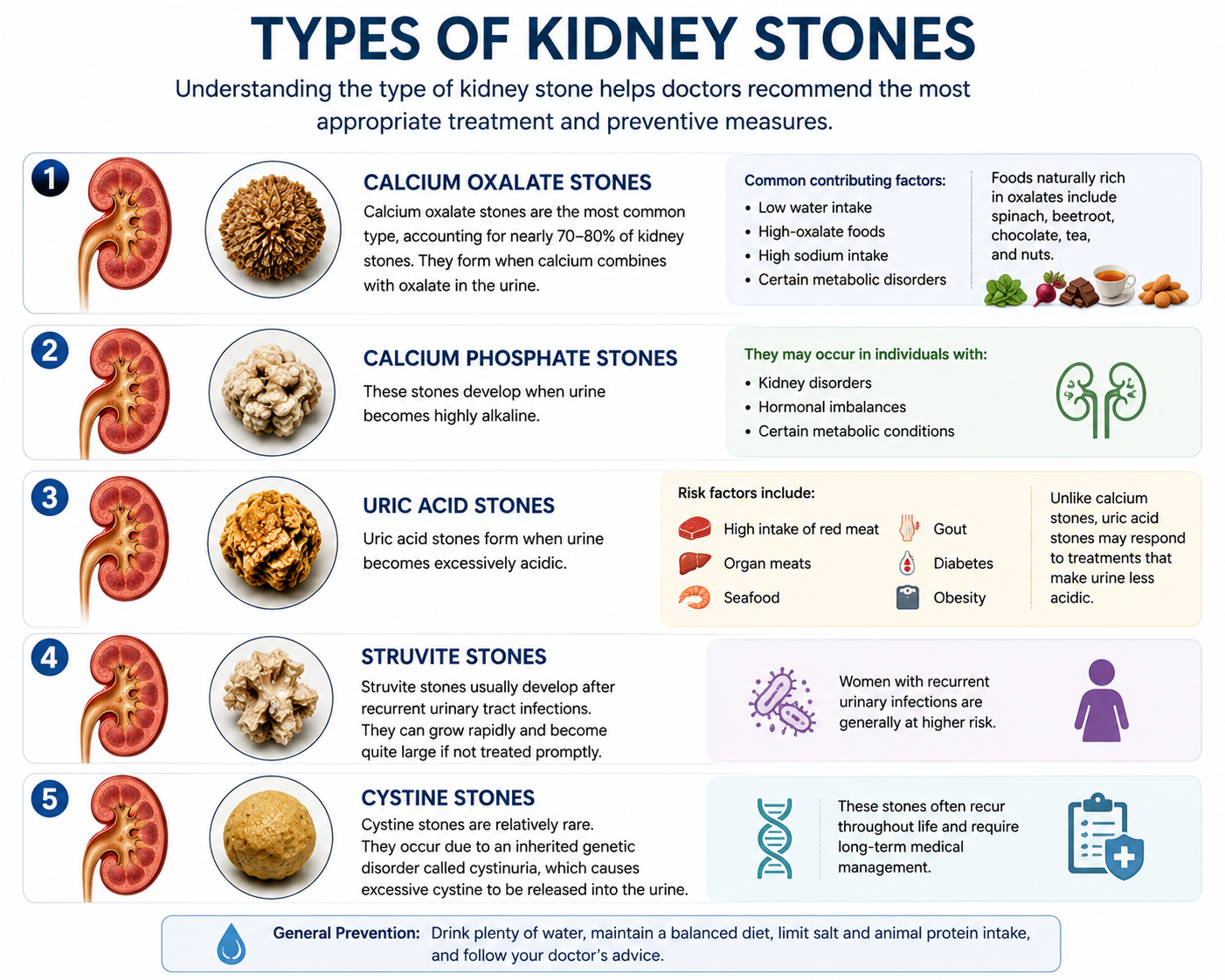
Understanding the type of kidney stone helps doctors recommend the most appropriate treatment and preventive measures.
1. Calcium Oxalate Stones
Calcium oxalate stones are the most common type, accounting for nearly 70–80% of kidney stones.
They form when calcium combines with oxalate in the urine.
Common contributing factors include:
- Low water intake
- High-oxalate foods
- High sodium intake
- Certain metabolic disorders
Foods naturally rich in oxalates include spinach, beetroot, chocolate, tea, and nuts.
2. Calcium Phosphate Stones
These stones develop when urine becomes highly alkaline.
They may occur in individuals with:
- Kidney disorders
- Hormonal imbalances
- Certain metabolic conditions
3. Uric Acid Stones
Uric acid stones form when urine becomes excessively acidic.
Risk factors include:
- High intake of red meat
- Organ meats
- Seafood
- Gout
- Diabetes
- Obesity
Unlike calcium stones, uric acid stones may respond to treatments that make urine less acidic.
4. Struvite Stones
Struvite stones usually develop after recurrent urinary tract infections.
They can grow rapidly and become quite large if not treated promptly.
Women with recurrent urinary infections are generally at higher risk.
5. Cystine Stones
Cystine stones are relatively rare.
They occur due to an inherited genetic disorder called cystinuria, which causes excessive cystine to be released into the urine.
These stones often recur throughout life and require long-term medical management.
Common Symptoms of Kidney Stones
Kidney stones may not cause symptoms until they move within the kidney or enter the ureter.
Once movement begins, symptoms often develop suddenly.
Severe Pain
The most common symptom is intense pain, often described as one of the most severe forms of pain.
Pain usually occurs:
- In the back
- Below the ribs
- Along one side of the body
- In the lower abdomen
- In the groin
The pain often comes in waves and changes in intensity.
Burning During Urination
A stone approaching the bladder may cause discomfort or burning while passing urine.
Blood in Urine
Urine may appear:
- Pink
- Red
- Brown
Blood is often caused by irritation of the urinary tract.
Frequent Urination
Some people experience:
- Frequent urge to urinate
- Passing small amounts of urine
- Difficulty emptying the bladder completely
Cloudy or Foul-Smelling Urine
This may indicate infection and requires prompt medical evaluation.
Nausea and Vomiting
Severe kidney stone pain often triggers nausea and vomiting due to shared nerve pathways between the kidneys and digestive system.
Fever and Chills
If kidney stones are associated with an infection, symptoms may include:
- Fever
- Chills
- Weakness
This is considered a medical emergency and requires immediate treatment.
When Should You Seek Immediate Medical Attention?
Seek urgent medical care if you experience:
- Severe pain that does not improve
- High fever with chills
- Persistent vomiting
- Blood in urine
- Difficulty passing urine
- Complete inability to urinate
- Severe abdominal or back pain
Early diagnosis helps reduce the risk of kidney damage and other complications.
Major Causes of Kidney Stones
Kidney stones usually develop due to a combination of dietary, lifestyle, environmental, and genetic factors.
1. Dehydration
Insufficient water intake is one of the leading causes of kidney stone formation. Concentrated urine allows minerals to crystallize more easily.
2. High Sodium Intake
A diet high in salt increases calcium excretion in urine, which may contribute to calcium-based stone formation.
3. Excess Animal Protein
Frequent consumption of red meat and organ meats can increase uric acid levels, raising the risk of uric acid stones.
4. Oxalate-Rich Foods
Some individuals may be more prone to calcium oxalate stones when consuming excessive amounts of foods naturally high in oxalates.
5. Obesity and Metabolic Disorders
Obesity, diabetes, and metabolic syndrome can alter urine chemistry and increase the likelihood of stone formation.
6. Family History
Having a close family member with kidney stones may increase your personal risk.
7. Certain Medical Conditions
Conditions such as hyperparathyroidism, inflammatory bowel disease, recurrent urinary tract infections, and some kidney disorders may also contribute to stone development.
Risk Factors for Kidney Stones
Several factors can increase the likelihood of developing kidney stones:
- Inadequate daily water intake
- Living in hot climates
- Sedentary lifestyle
- Diet high in salt and processed foods
- Obesity
- Diabetes
- Family history of kidney stones
- Recurrent urinary tract infections
- Certain medications
- Digestive disorders affecting nutrient absorption
Understanding these risk factors allows individuals to adopt preventive measures that support long-term kidney health.
Receiving a kidney stone diagnosis can be stressful, especially if you are experiencing severe pain. Fortunately, advances in medical care and growing awareness of traditional wellness practices provide several treatment options depending on the stone’s size, location, composition, and associated symptoms.
There is no single treatment suitable for every patient. The best treatment for kidney stones depends on factors such as:
- Stone size
- Stone location
- Stone type
- Severity of symptoms
- Presence of infection
- Kidney function
- Overall health
Small stones often pass naturally with hydration and medical supervision, while larger stones may require minimally invasive procedures. Alongside conventional medical care, many people also explore kidney stone Ayurvedic treatment as part of a comprehensive kidney wellness plan.
Best Treatment for Kidney Stones
The primary goal of treatment is to:
- Relieve pain
- Support urine flow
- Remove or help pass the stone
- Prevent infection
- Reduce the risk of recurrence
Treatment generally falls into two categories:
- Modern Medical Treatment
- Ayurvedic Supportive Care
Medical Treatment for Kidney Stones
Modern medicine provides several evidence-based approaches depending on the patient’s condition.
1. Increased Fluid Intake
For small kidney stones (typically under 5 mm), healthcare professionals often recommend increasing water intake.
Benefits include:
- Diluting urine
- Supporting natural stone passage
- Reducing crystal formation
- Promoting urinary flow
Many adults are advised to maintain sufficient daily fluid intake, though individual requirements vary based on health status and physician recommendations.
2. Pain Management
Kidney stone pain can be intense, particularly when a stone moves through the ureter.
Doctors may prescribe pain-relieving medications to improve comfort while the stone passes naturally.
Pain medications help control symptoms but do not dissolve kidney stones.
3. Alpha-Blocker Medicines
Certain prescription medicines relax the muscles of the ureter, making it easier for some stones to pass naturally.
These medications should only be taken under medical supervision.
4. Extracorporeal Shock Wave Lithotripsy (ESWL)
ESWL is a non-invasive procedure that uses shock waves to break kidney stones into smaller fragments.
It is commonly considered for:
- Medium-sized stones
- Stones located within the kidney or upper ureter
Advantages:
- No large surgical incision
- Relatively quick recovery
- Widely used procedure
5. Ureteroscopy (URS)
During ureteroscopy, a thin instrument is inserted through the urinary tract to locate and remove or fragment the stone using specialized tools or laser technology.
URS is commonly used for stones that have moved into the ureter.
6. Percutaneous Nephrolithotomy (PCNL)
PCNL is recommended for:
- Large kidney stones
- Multiple stones
- Complex stone formations
A small incision is made in the back to access and remove the stone directly.
7. Open Surgery
Open surgery is now relatively uncommon due to advances in minimally invasive procedures but may still be required in selected complex cases.
Kidney Stone Pain Relief Syrup India
One of the most searched terms online is “kidney stone pain relief syrup India.”
People experiencing sudden kidney stone pain often look for immediate relief. However, it is important to understand the role of these medicines.
Pain relief syrup primarily help manage discomfort while the underlying cause is being evaluated and treated. They do not remove or dissolve kidney stones.
Depending on the patient’s condition, doctors may prescribe medications such as:
- Non-steroidal anti-inflammatory drugs (NSAIDs)
- Certain prescription pain relievers
- Antispasmodic medicines
- Alpha-blockers to support stone passage
The choice of medication depends on the patient’s age, medical history, kidney function, allergies, and the size and location of the stone.
Self-medication is not advisable, particularly in cases of severe pain, fever, persistent vomiting, or reduced urine output. These symptoms require immediate medical evaluation.
Limitations of Pain Relief Syrup
Although pain medications provide temporary comfort, they do not address the underlying causes of stone formation.
Pain syrup generally do not:
- Dissolve existing stones
- Improve kidney function
- Reduce future stone formation
- Support urinary tract health
- Address lifestyle-related risk factors
This is why long-term kidney health often requires a combination of:
- Adequate hydration
- Dietary changes
- Medical follow-up
- Lifestyle improvements
- Appropriate treatment based on stone type
Some individuals also choose to incorporate Ayurvedic wellness practices under professional guidance to support urinary health.
Kidney Stone Ayurvedic Treatment
Kidney stone ayurvedic treatment has been practiced in traditional Ayurveda for centuries. Rather than focusing solely on symptom relief, Ayurveda emphasizes supporting the body’s natural balance through herbs, diet, hydration, and lifestyle.
In Ayurvedic texts, kidney and urinary disorders are discussed under the broader concept of Mutravaha Srotas (the urinary system). The aim is to promote healthy urinary function, maintain balance among the doshas, and support overall wellness.
Ayurvedic care is best viewed as a complementary approach and should not replace emergency medical treatment when urgent intervention is required.
Ayurvedic Principles for Kidney Wellness
Traditional Ayurvedic management often includes:
- Maintaining healthy hydration
- Supporting normal urinary flow
- Following a balanced diet
- Practicing appropriate daily routines
- Using selected herbs traditionally associated with urinary health
- Encouraging digestive balance
- Supporting metabolic function
Lifestyle Changes That Support Kidney Health
Lifestyle plays an important role in reducing the risk of recurrent kidney stones.
Stay well hydrated.
Water helps dilute urine and reduces the concentration of minerals that can contribute to stone formation.
Many healthcare providers encourage maintaining adequate hydration throughout the day, particularly in hot climates.
Reduce Excess Salt Intake
High sodium consumption increases calcium excretion in urine, which may increase the likelihood of certain kidney stones.
Limiting processed foods, packaged snacks, and excessive table salt may be beneficial.
Maintain a Healthy Body Weight
Obesity has been associated with a higher risk of kidney stones.
Regular physical activity and balanced nutrition contribute to overall kidney health.
Avoid Excessive Sugar
High intake of sugary beverages and processed foods may negatively influence metabolic health.
Choosing whole foods and limiting added sugars supports overall wellness.
Follow Medical Advice
People with recurrent kidney stones should attend regular follow-up appointments and undergo recommended investigations to identify the stone type and underlying cause.
Diet for Kidney Stone Patients
Dietary recommendations vary depending on the composition of the kidney stone. A healthcare professional or registered dietitian can provide individualized guidance.
General dietary principles include:
Foods That May Support Kidney Health
- Water
- Lemon water (if appropriate)
- Fresh fruits
- Vegetables
- Whole grains
- Moderate calcium intake from dietary sources
- Fiber-rich foods
Foods That May Need Moderation
Depending on the type of stone, healthcare professionals may recommend moderating:
- Excess salt
- Sugary drinks
- Highly processed foods
- Excess animal protein
- Foods naturally high in oxalates for susceptible individuals
Dietary restrictions should always be personalized rather than applied universally.
Home Care Measures
For selected patients with small stones, healthcare professionals may recommend supportive home care measures alongside medical supervision.
These may include:
- Drinking adequate fluids
- Remaining physically active as tolerated
- Taking prescribed medications correctly
- Monitoring symptoms
- Collecting the stone for laboratory analysis if advised
Herbal beverages and traditional dietary practices are sometimes used culturally, but they should not replace professional diagnosis or treatment.
Can Kidney Stones Be Prevented?
Yes. Many kidney stones are preventable through healthy lifestyle habits.
Prevention strategies include:
- Drinking enough water daily
- Maintaining a balanced diet
- Reducing excess sodium intake
- Staying physically active
- Managing diabetes and obesity
- Limiting unnecessary supplementation unless prescribed
- Following individualized dietary advice based on previous stone analysis
People who have experienced one kidney stone are at increased risk of developing another, making preventive care especially important.
Ayurvedic Support for Kidney Wellness
Many individuals interested in natural health choose Ayurvedic herbal formulations as part of their daily wellness routine. Traditional Ayurvedic herbs have long been used to support urinary tract health, maintain healthy kidney function, and promote overall well-being.
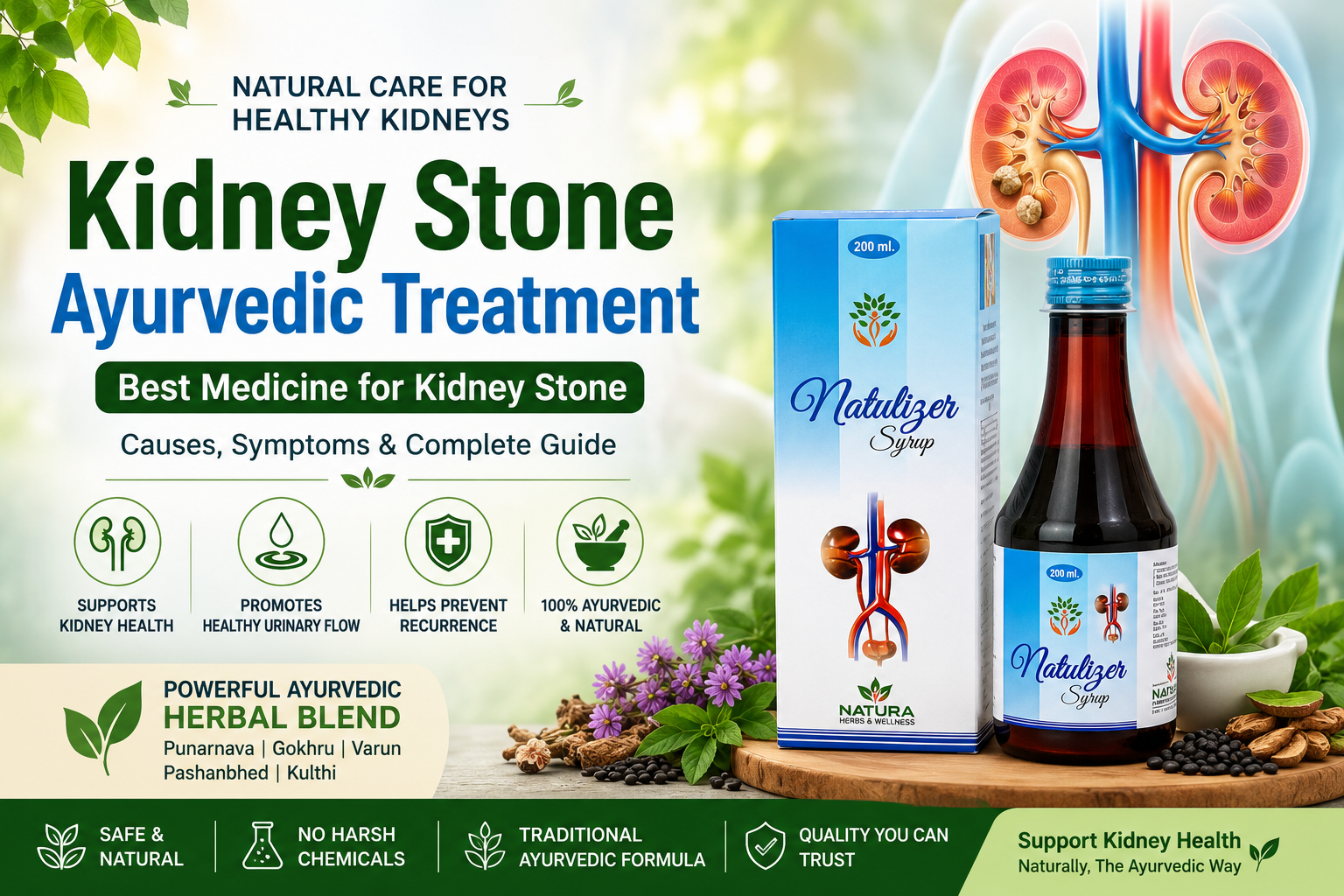
One such formulation is Naturalizer, an Ayurvedic herbal supplement developed with carefully selected traditional herbs. Its ingredients have a long history of use in Ayurveda for supporting urinary wellness and healthy kidney function.
Rather than making unrealistic promises, Naturalizer is designed to complement a healthy lifestyle that includes proper hydration, balanced nutrition, and medical guidance where appropriate.
In the next section, we will explore Naturalizer in detail, including its herbal ingredients such as Punarnava, Gokhru, Varun, Pashanbhed, and Kulthi, their traditional Ayurvedic significance, and why they are commonly included in formulations intended to support kidney and urinary tract health.
When Should You Visit a Doctor Immediately?
Do not rely solely on home remedies or supplements if you experience any of the following:
- Severe or persistent pain
- Fever or chills
- Blood in urine
- Difficulty or inability to pass urine
- Repeated vomiting
- Pain associated with pregnancy
- Symptoms in individuals with a single functioning kidney
- Symptoms in children or older adults with underlying medical conditions
Prompt medical assessment is essential in these situations to prevent complications.
Best Medicine for Kidney Stone: Choosing the Right Approach
One of the most common questions people ask online is “What is the best medicine for kidney stone?” The answer depends on several important factors because kidney stones are not all the same.
The most suitable treatment is determined after evaluating:
- The size of the kidney stone
- The location of the stone
- The stone’s chemical composition
- The severity of symptoms
- Whether there is an associated urinary tract infection
- The patient’s overall health and kidney function
Small stones may pass naturally with adequate hydration and medical supervision. Larger stones or those causing blockage often require medical procedures. Therefore, there is no single medicine that works for every type of kidney stone.
In addition to conventional treatment, many people include Ayurvedic kidney care as part of their wellness routine to support urinary tract health and healthy kidney function.

Naturalizer – Ayurvedic Herbal Support for Kidney Wellness
Naturalizer is an Ayurvedic herbal formulation developed with carefully selected ingredients traditionally used in Ayurveda to support kidney and urinary tract health. It combines multiple herbs known in classical Ayurvedic practice for promoting urinary wellness and maintaining healthy kidney function.
Naturalizer is intended to complement healthy lifestyle habits such as adequate hydration, balanced nutrition, and regular medical follow-up. It should not be viewed as a replacement for emergency medical care or physician-prescribed treatment.
Why Choose Naturalizer?
Naturalizer has been formulated using time-tested Ayurvedic herbs traditionally valued for urinary and kidney wellness.
Key Features
- Ayurvedic herbal formulation
- Carefully selected botanical ingredients
- Supports kidney wellness
- Supports urinary tract health
- Helps maintain healthy urinary function
- Suitable for daily kidney wellness support
- Made with traditional Ayurvedic ingredients
- Manufactured under quality-controlled processes
Ayurvedic Ingredients in Naturalizer
1. Punarnava (Boerhavia diffusa)
Punarnava is one of Ayurveda’s most respected herbs for supporting urinary and kidney health.
Traditionally Used For
- Supporting healthy kidney function
- Promoting urinary wellness
- Supporting natural fluid balance
- Maintaining overall kidney health
Why It Matters
Punarnava has been widely used in Ayurvedic formulations intended for maintaining urinary system health and supporting normal fluid metabolism.
2. Gokhru (Tribulus terrestris)
Gokhru has long been associated with urinary tract support in Ayurvedic practice.
Traditionally Used For
- Supporting urinary comfort
- Promoting healthy urinary flow
- Supporting kidney wellness
- Maintaining urinary tract function
It remains one of the most commonly used herbs in Ayurvedic urinary health formulations.
3. Varun (Crataeva nurvala)
Varun is another important herb traditionally used for urinary health.
Traditionally Used For
- Supporting bladder health
- Supporting healthy urinary function
- Promoting urinary tract wellness
- Maintaining kidney health
Ayurvedic practitioners have historically included Varun in formulations intended to support the urinary system.
4. Pashanbhed (Bergenia ligulata)
The name “Pashanbhed” has a long history in Ayurveda and is traditionally associated with urinary wellness.
Traditionally Used For
- Supporting urinary health
- Maintaining healthy kidney function
- Supporting normal urinary flow
- Promoting urinary comfort
Its traditional use has made it a popular ingredient in Ayurvedic kidney care formulations.
5. Kulthi (Horse Gram)
Kulthi has been valued in Ayurveda for centuries as both a nutritious food and a traditional ingredient for urinary health.
Traditionally Used For
- Supporting urinary wellness
- Maintaining kidney health
- Supporting natural cleansing processes
- Promoting healthy metabolism
Kulthi is commonly recommended in traditional dietary practices aimed at supporting urinary health.
Benefits of Naturalizer
When used as part of a healthy lifestyle, Naturalizer is designed to:
- Support healthy kidney function
- Support urinary tract wellness
- Promote healthy urinary flow
- Help maintain normal kidney health
- Complement hydration and healthy dietary habits
- Provide Ayurvedic herbal support for long-term kidney wellness
Healthy Habits That Support Kidney Wellness
Herbal supplements work best when combined with healthy daily habits.
Drink Adequate Water
Water helps maintain normal urine concentration and supports healthy kidney function.
Maintain a Balanced Diet
A diet rich in fruits, vegetables, whole grains, and adequate calcium from food sources supports overall wellness.
Limit Excess Salt
Reducing sodium intake may help support healthy urinary mineral balance.
Stay Physically Active
Regular exercise contributes to metabolic health and overall well-being.
Attend Regular Health Check-Ups
Individuals with recurrent kidney stones should follow their healthcare provider’s recommendations for monitoring and prevention.
Frequently Asked Questions (FAQs)
What Causes Kidney Stones?
Kidney stones develop when minerals and salts in the urine become highly concentrated and begin to crystallize. Over time, these crystals join together to form hard deposits known as kidney stones. Common causes include dehydration, excessive salt intake, high consumption of oxalate-rich foods, obesity, certain medical conditions, urinary tract infections, and a family history of kidney stones. Drinking enough water and following a balanced diet can help reduce the risk of stone formation.
How Are Kidney Stones Formed?
Kidney stones form when the kidneys are unable to keep minerals such as calcium, oxalate, and uric acid dissolved in urine. When urine becomes concentrated due to insufficient fluid intake or metabolic factors, these minerals stick together and create tiny crystals. As more minerals accumulate, the crystals gradually grow into stones. The process may take weeks or months depending on the underlying cause.
How to Stop Kidney Stone Pain Immediately?
Kidney stone pain can be intense and often requires medical evaluation. If you experience severe pain, contact a healthcare professional immediately. While waiting for medical care, staying hydrated (if advised), resting, and taking pain-relieving medication prescribed or recommended by a healthcare provider may help manage discomfort. Do not ignore symptoms such as fever, vomiting, blood in urine, or difficulty passing urine, as they may indicate a medical emergency.
How to Prevent Kidney Stones?
Preventing kidney stones involves maintaining healthy lifestyle habits that reduce the concentration of stone-forming minerals in urine. Helpful preventive measures include:
- Drink plenty of water throughout the day.
- Limit excess salt intake.
- Eat a balanced diet rich in fruits and vegetables.
- Maintain a healthy body weight.
- Avoid excessive sugary drinks and processed foods.
- Follow your doctor’s dietary advice based on your previous stone type.
- Stay physically active.
People with recurrent kidney stones should have regular medical follow-up to identify the cause and reduce future risk.
What Are the First Signs of Kidney Stones?
The first signs of kidney stones may vary depending on the size and location of the stone. Early symptoms often include:
- Sharp pain in the back or side below the ribs
- Pain that radiates toward the lower abdomen or groin
- Burning sensation while urinating
- Frequent urge to urinate
- Blood in the urine
- Cloudy or foul-smelling urine
- Nausea or vomiting
Some small kidney stones may not cause symptoms until they begin moving through the urinary tract.
Can Kidney Stones Go Away Without Surgery?
Yes. Many small kidney stones, especially those less than 5 mm in size, may pass naturally with adequate hydration and medical supervision. Larger stones or stones causing blockage, severe pain, or infection may require procedures such as shock wave lithotripsy (ESWL), ureteroscopy (URS), or percutaneous nephrolithotomy (PCNL). A healthcare professional will recommend the most appropriate treatment based on your condition.
What Is the Best Medicine for Kidney Stone?
There is no single medicine that works for every kidney stone because treatment depends on the stone’s size, location, and composition. Doctors may prescribe pain relievers, medications to help relax the ureter, or recommend minimally invasive procedures when needed. Some people also choose Ayurvedic herbal formulations such as Naturalizer as part of a broader kidney wellness plan. Herbal supplements should complement—not replace—medical evaluation and treatment.
Can Ayurvedic Treatment Help Support Kidney Health?
Ayurveda has traditionally used herbs such as Punarnava, Gokhru, Varun, Pashanbhed, and Kulthi to support kidney and urinary tract health. Ayurvedic formulations may be used as part of a healthy lifestyle that includes proper hydration, balanced nutrition, and regular medical care. They should not be considered a substitute for emergency treatment or physician-prescribed therapies.
How Much Water Should You Drink to Help Prevent Kidney Stones?
Fluid needs vary from person to person depending on age, activity level, climate, and medical conditions. Many healthcare professionals advise drinking enough fluids to maintain pale yellow urine, as this helps dilute minerals that can contribute to kidney stone formation. Your doctor can recommend the appropriate daily fluid intake based on your individual health.
Can Kidney Stones Come Back?
Yes. People who have had a kidney stone are at a higher risk of developing another in the future. Staying well hydrated, following a balanced diet, maintaining a healthy weight, and attending regular medical check-ups can help reduce the chances of recurrence. If a stone has been analyzed, following dietary recommendations based on its composition is especially important.